
International Pride Day is often a moment of visibility and celebration. It is also a reminder that, for many LGBTQIA+ people, dignity and inclusion are still not guaranteed in everyday life, including at work.
In some environments, LGBTQIA+ individuals still face exclusion, silence, or unequal treatment at work. But workplaces can also be places where inclusion is consciously created through clear policies, inclusive hiring, and cultures where people can be welcomed, recognized and heard – even in countries where the broader context remains challenging.

Polish cultural hub 100cznia joined the NESsT Violet Fund in 2026 to strengthen the safety, quality, and inclusivity of its workplaces.
In Central and Eastern Europe, where inclusion remains uneven and shaped by gaps in legal protections, this work is especially important. According to the 2026 ILGA-Europe’s Rainbow Map, both Poland and Romania rank among the lowest in the European Union in terms of LGBTQIA+ rights and protections. Poland scored 21% while Romania ranked one of the lowest in the EU with under 19%, with particularly low scores in family rights, hate crime protections, and legal gender recognition.
These challenges also reflect broader patterns of exclusion in labor markets across the region, affecting groups such as people with disabilities, refugees, migrants, and ethnic minorities. For some LGBTQIA+ individuals, these barriers can overlap with other forms of discrimination, making inclusive employment both a targeted response and part of a wider effort to build fairer labor markets.
“In Central and Eastern Europe, where the lives of LGBTQIA+ people are often shaped by systemic limitations and a lack of broad social acceptance, workplaces can play a uniquely important role as safe havens. In such contexts, organizations that actively foster inclusion can become spaces where individuals feel protected, valued, and able to be themselves despite external challenges. That is why it is so important to invest in businesses that are intentionally building inclusive cultures from within.”
At NESsT, we start from this reality and design our investments to respond to it. Through the NESsT Violet Fund, we invest in enterprises that are building inclusive work environments where employees can feel valued, respected, and safe, while expanding access to dignified jobs for LGBTQIA+ individuals and other underrepresented groups. Their work shows how inclusive business models can create opportunities more broadly across underserved communities.
Filip Wadowski, NESsT Violet Fund Director, shares: “We focus on small and growing businesses because they have the potential to shape workplace culture from the ground up. Through the Violet Fund, we are not only investing in growth, but in how companies hire, lead, and create opportunities for people who are often excluded from the labor market.”
Building a more inclusive economy
Small and medium-sized enterprises (SMEs) form the backbone of the economy, generating a significant share of jobs and economic activity. This makes their role in shaping inclusive workplaces particularly significant.
At the same time, research from the Diversity, Equity, and Inclusion (DEI) Management Framework for Smaller Firms (SME) in Europe: A Practical Guide (2026) highlights a persistent gap between inclusion efforts and lived experience. While 77% of employees report feeling generally valued and included, only 37% of people with disabilities and 34% of LGBTQIA+ respondents feel fully included. This contrast points to a clear divide between being present in the workplace and truly experiencing belonging.
Addressing this gap requires greater visibility, intentional practices, and work environments that respond to diverse needs. NESsT’s work with social enterprises and impact-driven SMEs—organizations that create dignified employment for marginalized communities—positions us uniquely to contribute to this shift.
Over the past year, the Violet Fund has invested in a diverse cohort of enterprises tackling these challenges in different ways, from grassroots organizations deeply embedded in local communities to more traditional businesses strengthening their diversity, equity, and inclusion practices. This brings the fund’s portfolio to a total of five companies, with an investment portfolio totaling USD $950K.





While the enterprises in the NESsT Violet Fund do not follow a single business model, they share a clear intention: inclusion is not treated simply as a statement of values. It is reflected in how teams are built, how decisions are made, and how opportunities are created.
In practice, these enterprises are rethinking how they hire, retain, and support employees more broadly, creating more accessible and flexible workplaces that benefit an even wider range of people who are often excluded from traditional labor markets, including older working adults, young people entering the job market, migrants and refugees, and ethnic minority communities.

The Olsztyn Food Bank joined the Violet Fund in 2026 to strengthen and formalize its workplace DEI practices.
One of these enterprises is the Olsztyn Food Bank. Based in northeast Poland, the organization is using the Violet Fund’s support to move from informal inclusion to a more structured diversity, equity, and inclusion practices. Its three-year plan includes staff and leadership training, formal anti-discrimination and anti-mobbing policies, bias-free recruitment guidelines, and partnerships with LGBTQIA+ organizations. The aim is to strengthen the organization internally while improving its ability to serve diverse communities more effectively.
“This partnership allows us to scale our Social Integration Centre (CIS), create new vocational spaces for marginalized individuals, and deeply integrate a robust diversity, equity, and inclusion plan into our daily operations,” shares Aneta Janikowska, Managing Director, OFB
Why this work matters now
For many LGBTQIA+ people, work is still a place where exclusion shows up in very real ways, from unequal opportunities to everyday bias and, in some cases, harassment.
Even where legal protections exist, implementation gaps can remain. In Poland and Romania, anti-discrimination frameworks coexist with limited institutional progress and uneven everyday experiences. These dynamics reflect broader labor market inequalities, where access, safety, and opportunity are not consistently distributed.
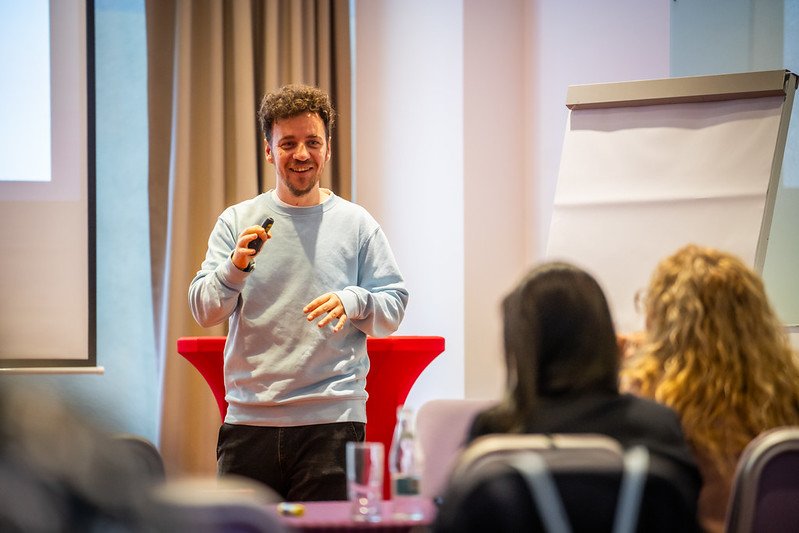
Mihai Cepoi, CEO of Jobful, presents the tech enterprise’s inclusive approach to recruitment at the NESsT portfolio gathering in Romania, 2025
Jobful’s experience shows how inclusive employment models can evolve as enterprises learn to respond to different forms of exclusion, as Mihai Cepoi, CEO of the tech social enterprise explains:
"It is challenging in a society like Romania’s to propose programs dedicated to the LGBT community and to support professionals who, in one way or another, experience discrimination when looking for a job or within professional contexts. In terms of [Jobful’s] vision, we want to support all vulnerable communities. Our starting point was Ukrainian refugees. The next step was supporting people with disabilities. Now we are expanding our support to the LGBT community.”
He adds, “For us, it’s about how we approach the work – we try not to have fixed assumptions about the outcomes. This is something we’ve learned over the time while expanding the program for the LGBT community in Romania. We know there will be challenges, but we hope for support from the wider ecosystem.”
“In terms of [Jobful’s] vision, we want to support all vulnerable communities. Our starting point was Ukrainian refugees. The next step was supporting people with disabilities. Now we are expanding our support to the LGBT community.”
Businesses therefore have real leverage. Workplaces can reinforce exclusion—or become places where dignity and belonging are built, particularly where broader social acceptance is limited. This is especially important for small and medium-sized enterprises, which as mentioned, form the backbone of local economies. Yet DEI is still often seen as the domain of large corporations, with most research and practice historically focused on larger firms rather than smaller ones.
This is why concrete examples matter. Smaller enterprises that embed inclusion into how they hire, lead, and grow not only create safer environments, but also demonstrate that inclusive approaches can generate real economic value. By focusing not only on providing financing, but also on how capital is deployed, the NESsT Violet Fund ensures that investment reaches enterprises that are intentionally building inclusive workplaces, supporting them to grow and create dignified employment.
From awareness to action
Beyond investment, the Violet Fund has also contributed to broader conversations around what inclusion looks like in business – particularly in the context of small and medium-sized enterprises, where DEI is often less visible but no less impactful.
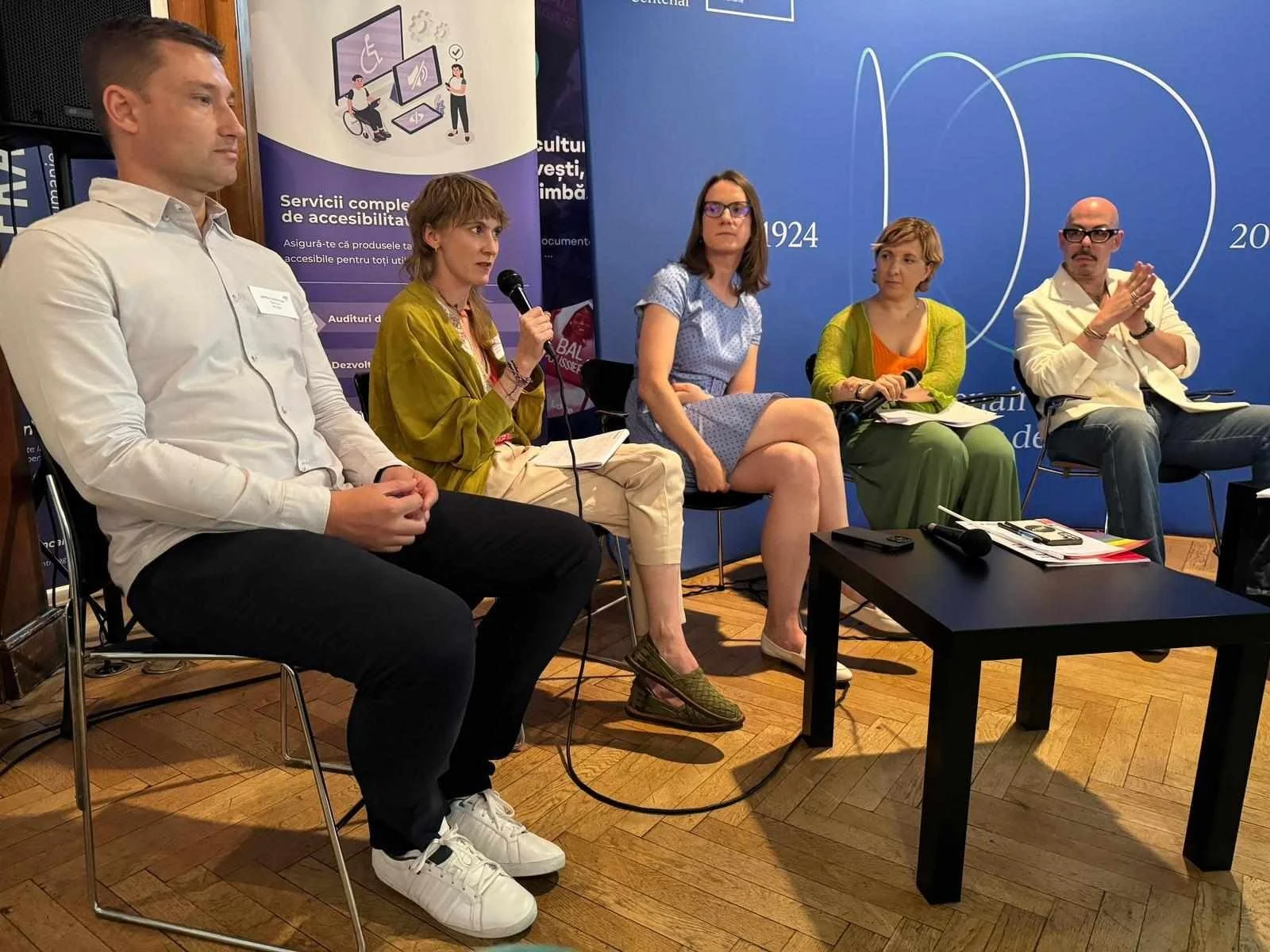
Violet Fund Portfolio Manager Justyna Markowicz speaks at the LGBT+ at Work Conference 2024 organised by the Romanian Diversity Chamber of Commerce (RDCC)
From participating in discussions at events like the European Economic Congress, LGBT+ Film Festival Poland, and engaging in dialogues on improving access to financing, NESsT’s focus has been on practical steps. The aim is to move conversations about inclusion into concrete changes in how companies operate.
In contexts where policy progress can be slow or uneven, these business-led efforts are especially important. As we have seen, they show how private sector action can help advance inclusion in tangible ways.
“To entrepreneurs—especially those running small and medium-sized businesses in Poland—I have a message. I encourage you to look at our community with genuine curiosity, care, and openness, and to understand the challenges we face in Poland. I’m thinking in particular of LGBT+ people who already work for you or could in the future. You will certainly benefit from understanding how to effectively manage diverse teams, and there may also be funding available to help you create more opportunities for people from our community; it’s worth making use of it.
“And to queer entrepreneurs—members of the LGBT+ community who run their own businesses—I also have a message: be open about who you are, because by doing so, you show others in the LGBT+ community that starting your own business is possible.” – Aleksandra Muzińska, Co-Founder of For a Change Fund, NESsT Violet Fund Credit Committee Member
“To entrepreneurs—especially those running small and medium-sized businesses in Poland—I have a message. I encourage you to look at our community with genuine curiosity, care, and openness, and to understand the challenges we face in Poland.”
Building more inclusive workplaces ultimately depends on a broader ecosystem, including investors, policymakers, and business leaders, working together to remove barriers and support enterprises that are leading this change.
Looking ahead
Pride Day is often framed as a celebration, as it is and should be. But it is also a reminder of the work that remains to build economic systems where dignity, respect, and opportunity are reflected in how we work, hire, lead, and invest.
Inclusive entrepreneurship is one way to make this tangible. It creates quality jobs, supports leadership opportunities, and enables individuals to shape their own economic futures.
In regions like Central and Eastern Europe, where LGBTQIA+ individuals still face legal, social, and workplace barriers, this approach is particularly important. It ensures that progress is not driven by policy change alone, but also by businesses that are actively creating more inclusive workplaces today.
While this work is rooted in advancing LGBTQIA+ inclusion, its implications extend further, shaping more open, equitable labor markets for a wide range of underserved groups.
““If we want to see lasting change, we need more capital directed toward businesses that are actively creating inclusive workplaces and local communities. The Violet Fund demonstrates what is possible, but scaling this impact depends on more investors choosing to engage.””
At NESsT, we believe that investing in inclusive enterprises is not only about addressing inequality. It is about building stronger, more resilient economies for everyone.
That is the vision behind the NESsT Violet Fund, and why we continue to support entrepreneurs working to create workplaces where dignity, respect, and opportunity are real for all.
Interested in supporting this work?
NESsT is partnering with investors who are looking to deploy capital in ways that drive both financial returns and more inclusive labor markets. If you would like to learn more about how to get involved in the Violet Fund, we invite you to contact a member of our team to learn more: