On World Refugee Day 2026, the theme “Until Everyone Is Safe” reminds us that safety is about much more than reaching refuge. For families rebuilding their lives in a new country, it can also mean stability, belonging, and access to the support systems that make everyday life possible.
This approach shapes the work of Future Leaders Project (FLP), an early education enterprise in Wrocław, Poland. Founded by Ruslan Syvoplias, who emigrated from Ukraine to Poland in 2018 following Russia's 2014 annexation of Crimea, FLP draws on Ruslan’s own experience of migration to build a more inclusive model of early education for families facing displacement. Through bilingual learning, culturally responsive care, and practical support for parents navigating life in a new country, FLP helps children and families begin to rebuild a sense of safety and belonging.
We spoke to Ruslan about his journey building FLP, why early education matters for refugee children, and how – with NESsT’s support – he is strengthening this model to reach more families rebuilding their lives in Poland.
You moved from Ukraine to Poland in 2018. What did that experience teach you about what people need most when they are trying to rebuild their lives somewhere new?
Ruslan: My own experience of migration taught me that people need more than physical safety when they arrive in a new country. They also need clarity, understanding, and the reassurance that they are not facing everything alone. Very quickly, practical questions begin to shape the stability of the whole family: where to find housing, how to legalize your stay, where to enrol a child in preschool, how to find work, which office to go to, and what documents to prepare. What may seem like ordinary administrative tasks to others can become major barriers for migrants and refugees. That is why simple, clear, and kind communication matters so much.
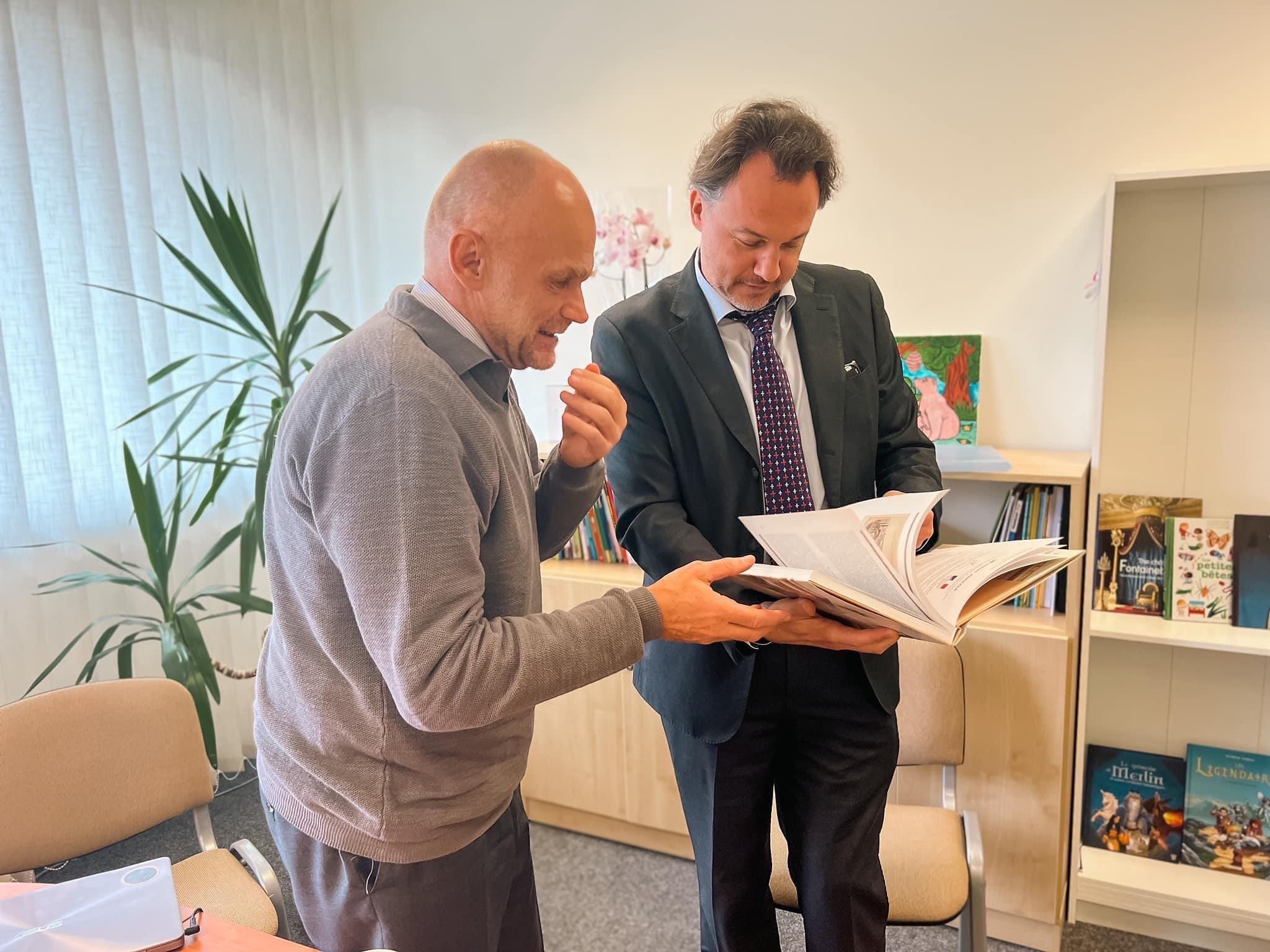
Ruslan and teacher at Future Leader Project (FLP) educational center
Sometimes what helps most is not a large program, but someone who can calmly explain the first step. Over time, I came to understand that safety after migration means more than having a roof over your head. It is also the feeling that your child has a place to belong, that a parent can return to work, and that the family can begin to function in a new environment as people with the right to build a future.
“Safety after migration means more than having a roof over your head. It is also the feeling that your child has a place to belong, that a parent can return to work, and that the family can begin to function in a new environment as people with the right to build a future. ”
When you started FLP, what gap did you see in how children from refugee and migrant families were being supported in education?
The idea for FLP began before the full-scale war in Ukraine. In 2016, my wife and I opened a private preschool in Odesa, and as the conflict continued, we began thinking about how to secure the future of our family business in a more stable environment. In 2017, I started exploring Poland, especially Wrocław. I read that the city was lacking thousands of preschool places, and that was the first clear sign of a real social need.
When I met with the Department of Education in Wrocław, I saw something even more important: many Ukrainian families were already living there, but often without access to an institution that understood their language, culture, and the challenges of adapting to a new country. That was the gap I wanted to address. It was not just about opening another preschool. It was about creating a welcoming space where children from migrant families could feel safe from the first day, and where parents could find trust, understanding, and clear communication.
Why do the early years matter when it comes to integration and long-term outcomes for refugee children?
The first years of life are when language, social skills, and a sense of security begin to take shape. For refugee and migrant children, this period matters even more, because their first educational experiences in a new country often influence whether they feel part of the community or like outsiders. A young child may not understand the reasons behind relocation or the stress their parents are under, but they do feel the atmosphere around them. They notice whether adults are calm, whether the environment is friendly, whether someone understands their emotions, and whether they can speak, play, and make mistakes without fear.
That is why early education is about much more than childcare. It becomes the first bridge between home and a new society. If children receive the right linguistic, emotional, and social support early on, they are more likely to enter school with confidence, build relationships more easily, and begin to see learning as something positive rather than stressful.
“Early education is about much more than childcare. It is the first bridge between home and a new society.”
FLP’s teachers are migrants themselves. What difference does that make in how children and families experience care and learning?
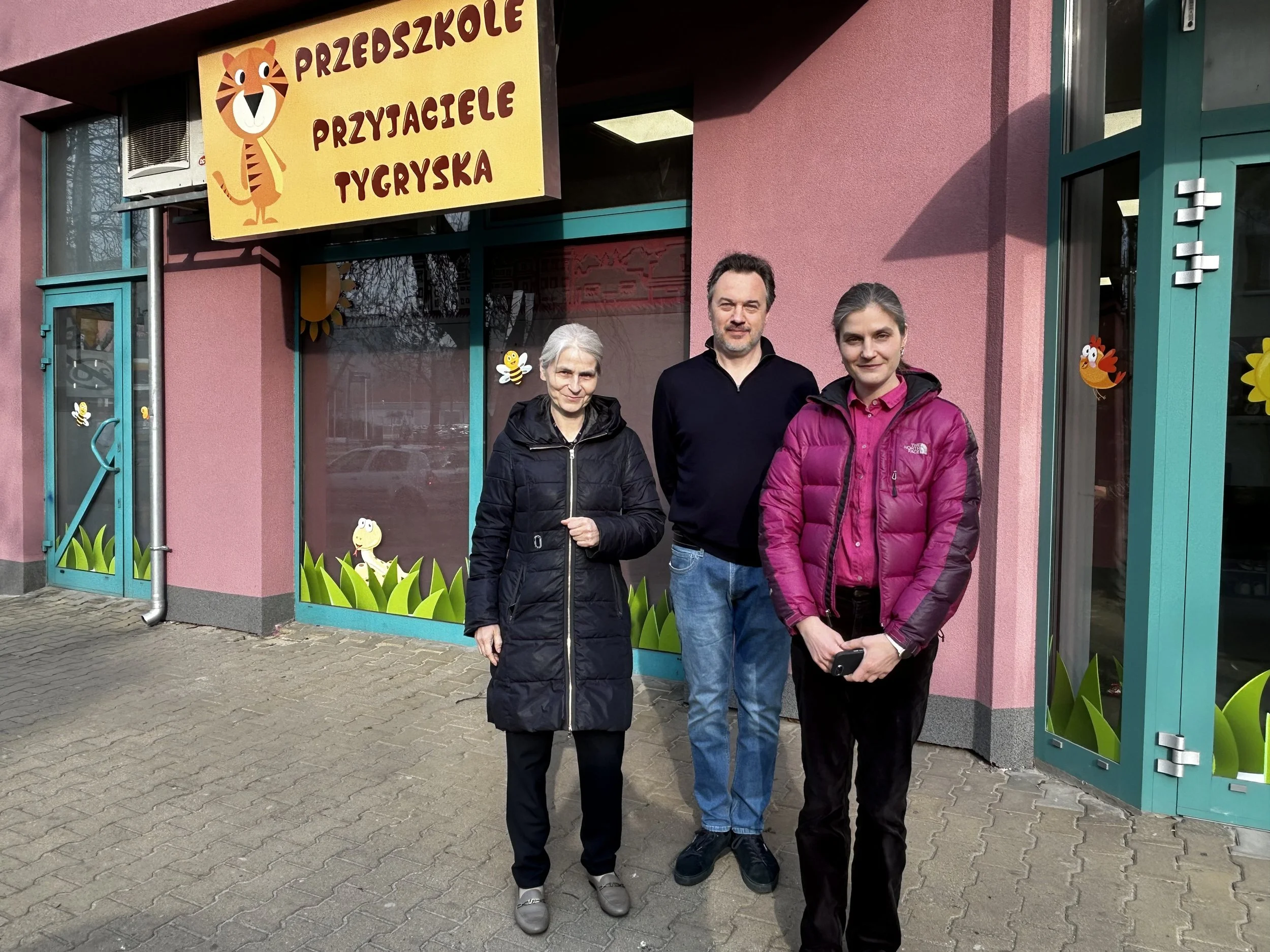
Ruslan (center) with two of FLP’s early years teachers
It makes a huge difference. Many of our teachers understand migration not only professionally, but personally. They know what uncertainty feels like, what it means to start again, and how stressful it can be for families to navigate everyday life in a foreign language. For children, that means there is often an adult in the room who can bridge two worlds: home and Poland. A teacher can explain new rules in a way the child understands, name emotions, offer comfort, and help them join the group step by step. This makes a child feel supported rather than thrown into an unfamiliar environment alone.
For parents, it matters just as much. Many leave their children at preschool with a mixture of hope and fear. When they meet a teacher who understands their situation from lived experience, trust becomes much easier to build. I see our teachers not only as educators, but as guides through the process of adaptation.
How has NESsT’s support helped you strengthen FLP at this stage in your journey?
Joining NESsT helped me look at FLP not only as a network of educational centres, but as a social-impact model that can be strengthened, developed, and better articulated. In everyday operations, it is easy to focus only on immediate tasks: enrolments, staffing, finances, paperwork, and communication with parents. NESsT helped me step back and ask the bigger questions: what are our goals, what social problem are we solving, what impact are we creating, and how can we measure and communicate that clearly?
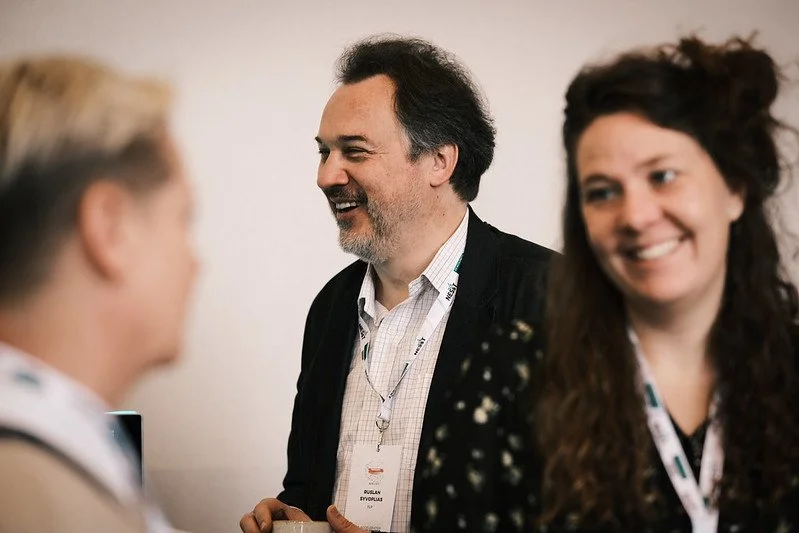
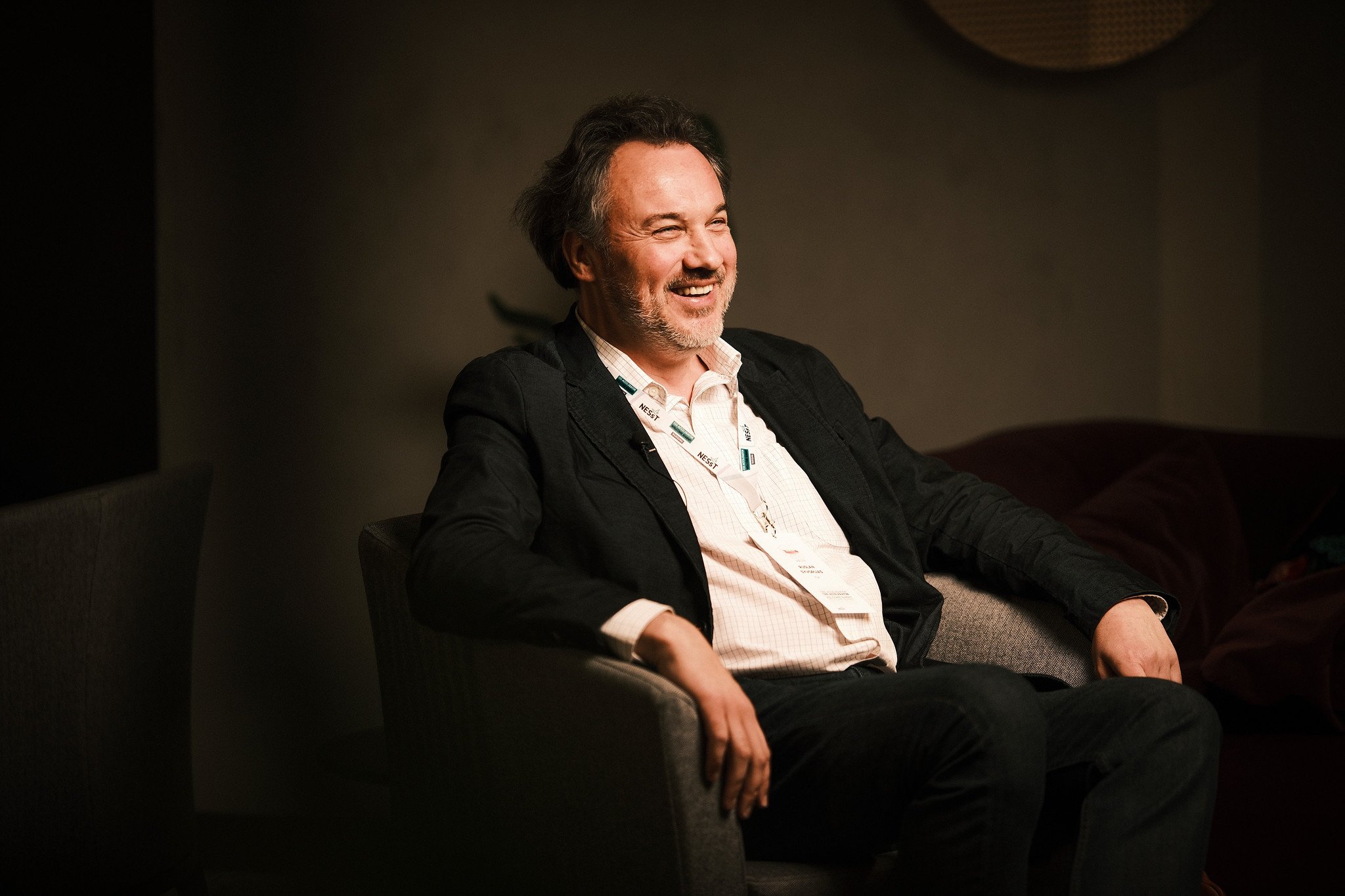
Ruslan (center) at the NESsT portfolio gathering in Warsaw, October 2025
Their support has also been valuable in helping me think about organisational stability. Educational initiatives for migrant families need not only a strong mission, but also a solid operating model, stable finances, and the ability to plan for growth. NESsT helped me connect those two areas more clearly: social mission and entrepreneurial management. It also helped me see that what began as a response to the needs of Ukrainian families in Wrocław could have broader relevance as a model of inclusive early education.
“Joining NESsT helped me look at FLP not only as a network of educational centres, but as a social-impact model that can be strengthened, developed, and better articulated.”
FLP’s preschools and nurseries cater predominantly to children from Ukrainian refugee families, but also welcome those from other migrant backgrounds, such as Belarus, Kazakhstan, and Armenia. Today, its bilingual education and culturally-responsive model currently supports over 100 children every year to adjust to life in Poland.
Alongside NESsT, Ruslan and the FLP team are expanding FLP’s existing centres to welcome more children while employing more qualified Ukrainian teachers in dignified jobs. NESsT will also provide targeted support on impact reporting supporting FLP to measure and manage its social impact on local communities in Wrocław.