
When we talk about entrepreneurship, a familiar set of images tends to come to mind: technology startups, venture capital rounds, unicorns, and the founders behind the next billion-dollar company.
Those entrepreneurs deserve recognition. But ambition, innovation, and growth are not limited to the companies that attract the largest investment rounds or the most media attention.
During Global Entrepreneurship Week, I think we should also be asking a different question: Which entrepreneurs are creating the kind of value our communities and our planet need most?
Some of the most consequential entrepreneurs today will never build a unicorn. They may never appear on the cover of a business magazine or announce a headline-grabbing investment round. Despite this, they are building businesses that create dignified jobs in communities routinely overlooked by traditional markets. They are developing solutions to some of the world’s most pressing environmental and social challenges. They are expanding economic opportunities while remaining deeply connected to the places where they work.
Building businesses that are rooted in local communities
At NESsT, we have spent nearly three decades working alongside entrepreneurs who see business not simply as a vehicle for growth, but as a way to solve challenges from rural unemployment and unequal access to markets to environmental degradation.
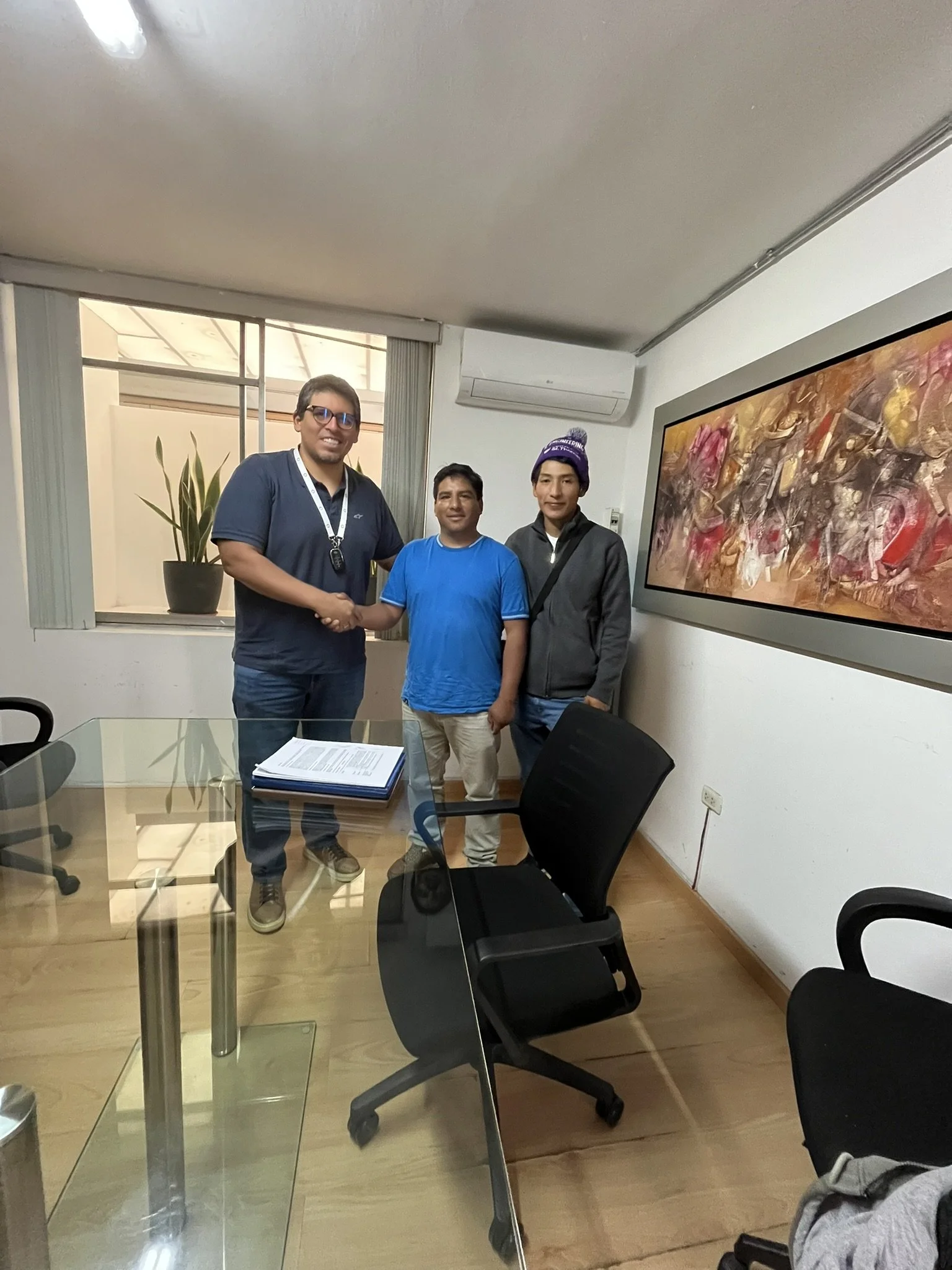
Photo: Jorge Chávez, NESsT Lirio Fund Andes Director, with Juan Ccasa Cardenas, Director of Commercialization at Café Orígenes
In Peru, Café Orígenes brings together 64 coffee producers from remote communities in the Lacco Valley, within the buffer zone of the Manu Biosphere Reserve. Founded by local farmers and the Andean Alliance for Sustainable Development to improve the livelihoods of coffee-growing families, the cooperative is led by Director of Commercialization Juan Ccasa Cardenas and President René Quispe Espinoza, himself a coffee producer from Umapata. Today, Café Orígenes connects its producers with differentiated specialty markets where they can secure better prices, while reinvesting in agroecological training that supports their productivity and stewardship of primary and secondary forests.
By strengthening local capacity and bringing high-quality coffee from an exceptionally remote part of Cusco to international buyers, the cooperative is helping farming families capture more of the value generated by what they grow.
At a recent gathering with our portfolio in Peru, Juan explained that NESsT’s follow-on investment is helping the cooperative finance the coffee harvest and pay its coffee farmers. The team has also been strengthening its financial planning by reviewing income, expenses, and short- and medium-term projections.
“We now have a clearer picture of what the cooperative could look like in one or two years,” Juan shared. “That helps us plan our strategy and identify where we still need to improve.”
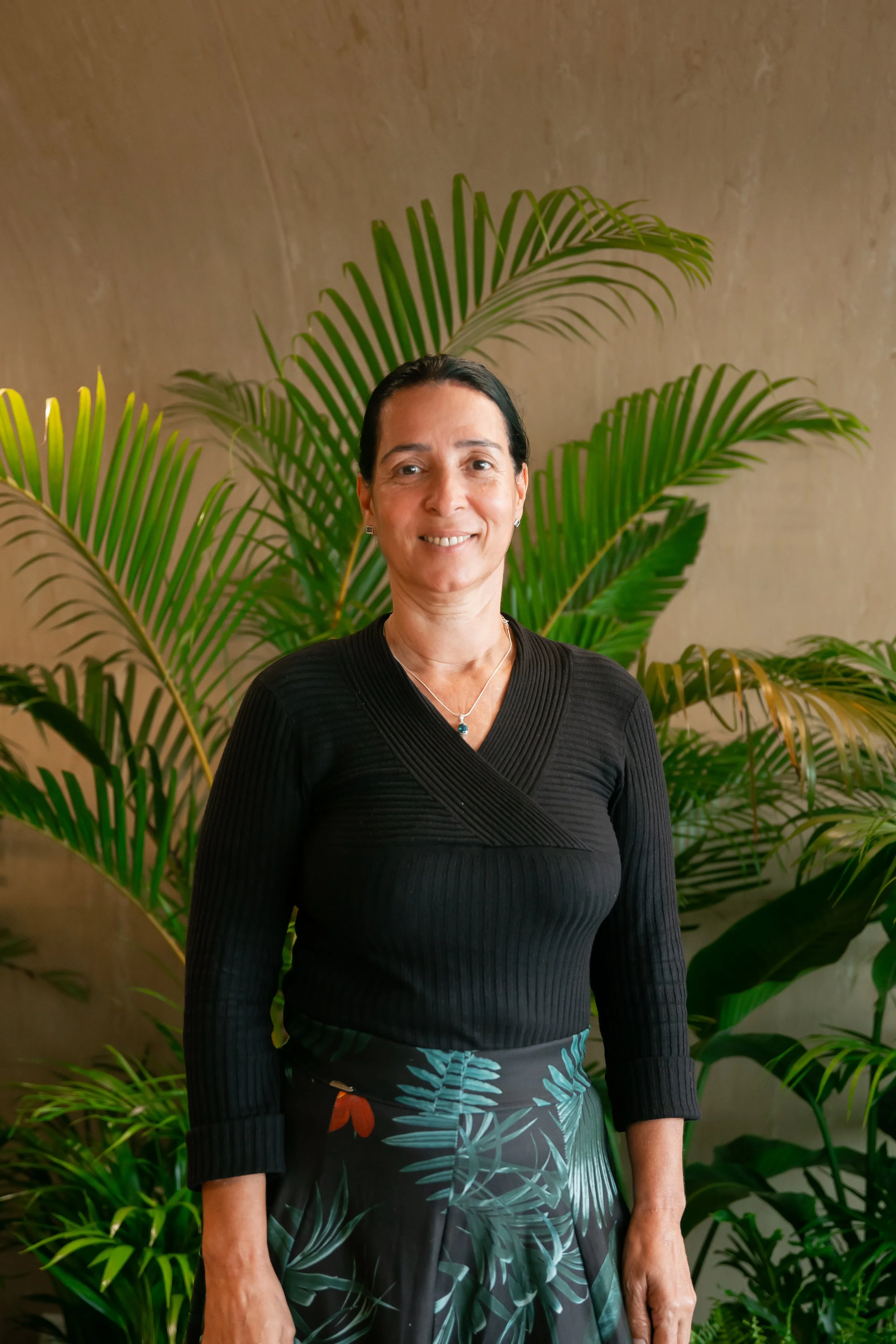
Photo: Plantus founder Zelita Maria Rocha Santos at a NESsT Brazil portfolio gathering
In Brazil, Plantus founder Zelita Maria Rocha Santos is building a business that focuses on the growth and independence of 34 local producer families in the Amazon. These producers – 35% of whom are women – supply Plantus with the necessary seeds and fruits to extract oils and organic compounds that are then sold on the international market to pharmaceutical, food, and cosmetic industries. Plantus also works with suppliers to improve harvesting and quality-control practices, ensuring that raw materials can be traced, that collection does not contribute to deforestation, and that producers are paid under Fair Trade conditions.
In Colombia, BioIncos co-founder Yuli Rodríguez is demonstrating how Indigenous-led entrepreneurship can create income while protecting biodiversity. The enterprise works with Indigenous communities and farming families in the Amazonian Piedmont to collect wild cacay, buriti, and seje fruits and transform them into natural oils for the cosmetics industry. Its model pays collectors above-average prices, creates employment and training opportunities for Indigenous women and people affected by conflict, and supports the conservation of high-biodiversity corridors. BioIncos was also the first enterprise authorized to harvest cacay in an Indigenous reserve, showing how commercial value chains can generate livelihoods while recognizing collective territorial ownership and supporting long-term stewardship of the forest.
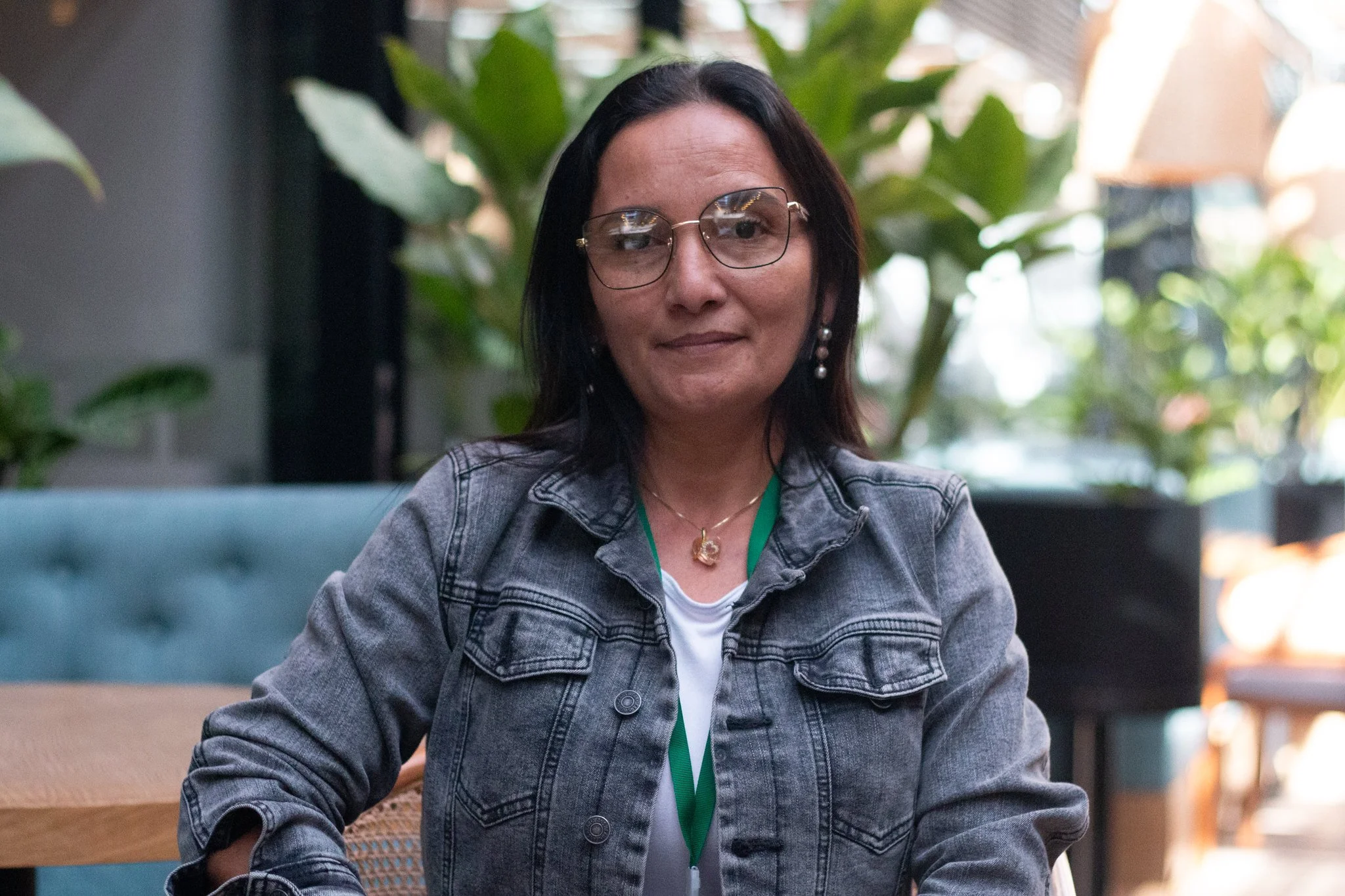
Photo: BioIncos co-founder Yuli Rodríguez at a NESsT Colombia portfolio gathering
When BioIncos joined NESsT’s Regional Indigenous Incubator, Yuli described the larger ambition behind the business:
“My dream is that one day we can say the Amazon bioeconomy really is viable, that people can make a living from it, and that we never have to say the forest is gone.”
Her words capture what makes BioIncos’s model so important. The business is not treating conservation and livelihoods as competing goals. It is showing how income generated from native forest products can give people a stronger economic reason to protect the ecosystem around them.
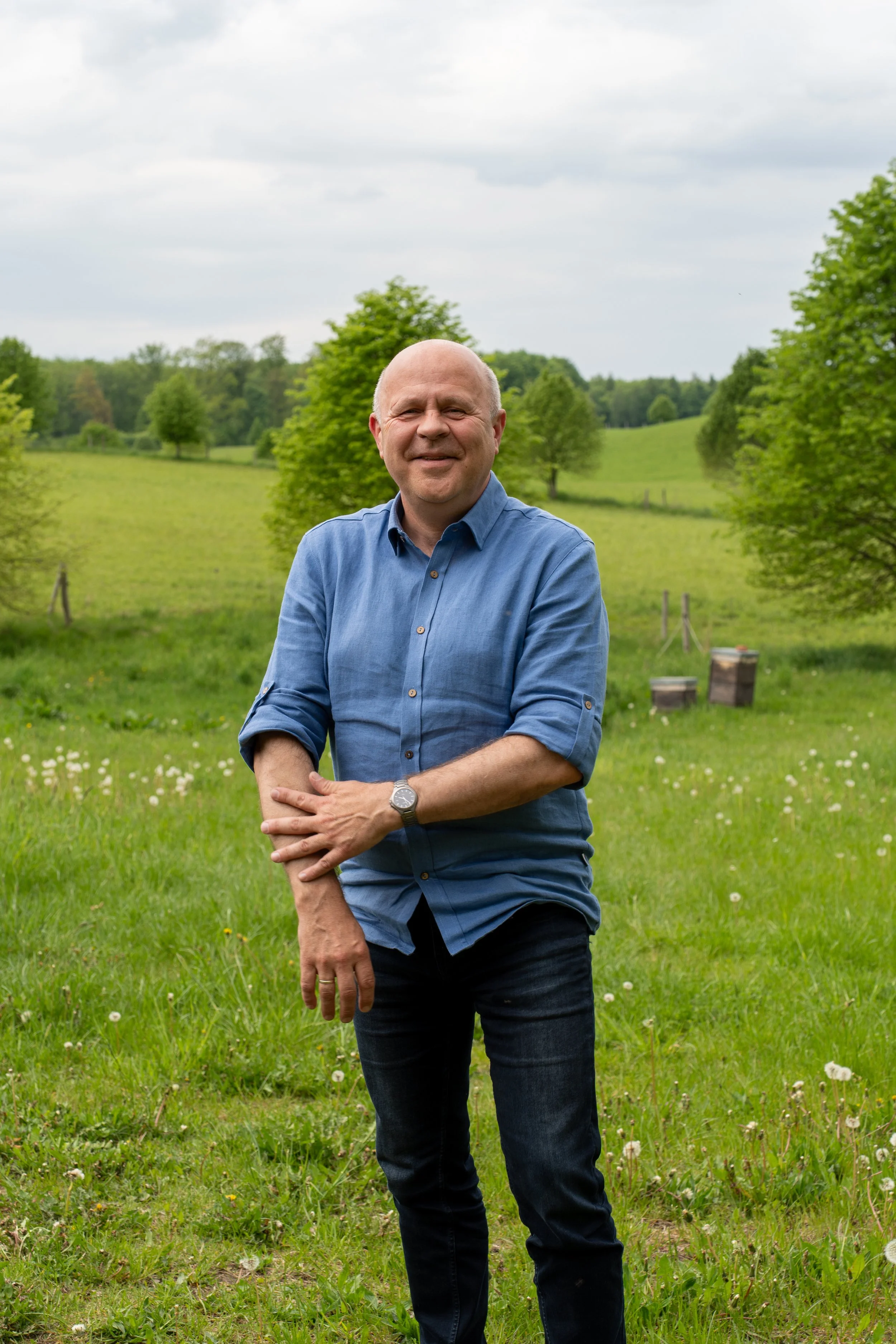
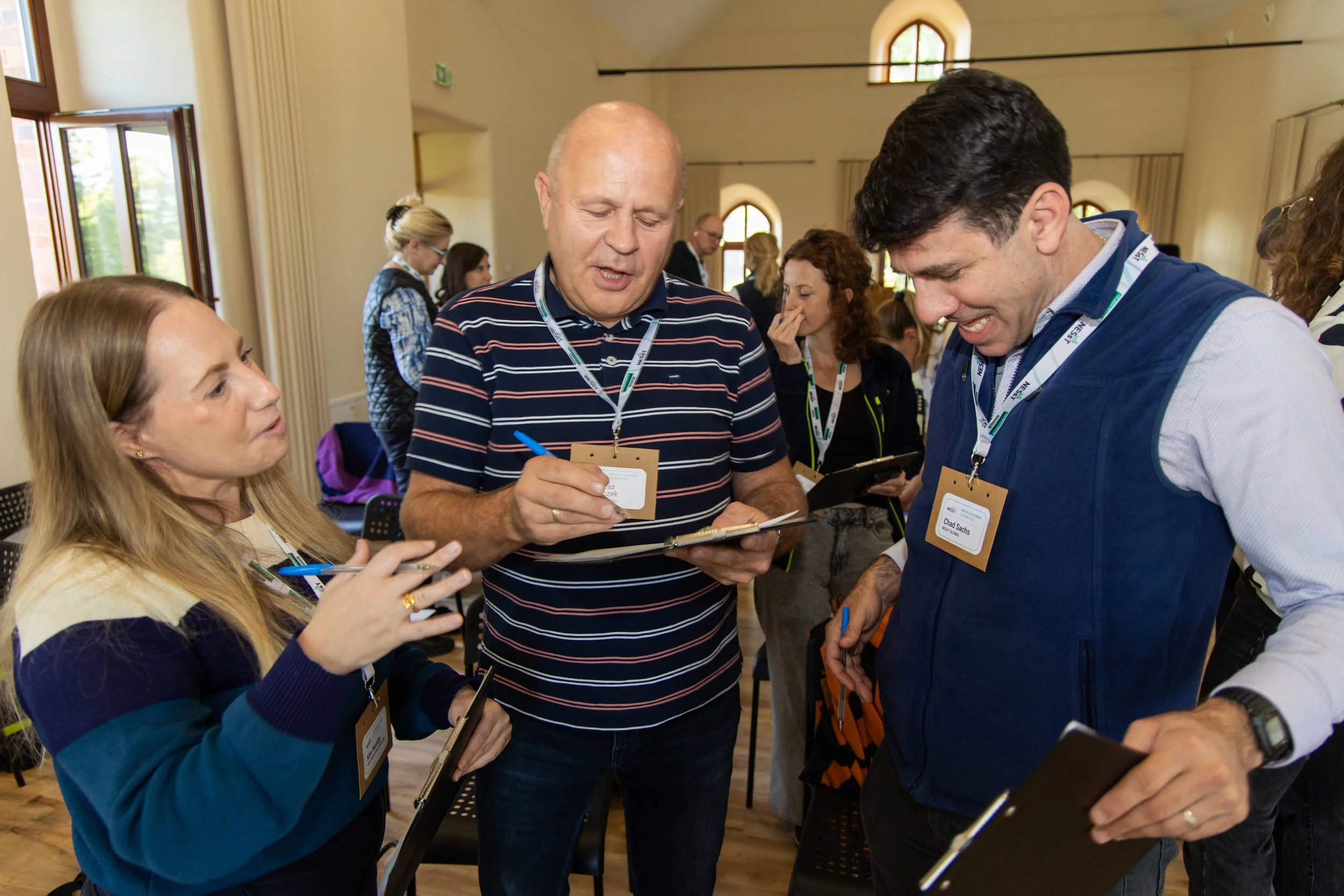
Photo: Juchowo Farm CEO Tomasz Piszczek, a part of the NESsT Poland portfolio
And in Poland, Juchowo Farm combines biodynamic agriculture with the revitalization of rural communities. In September I had the chance to meet the CEO, Tomasz Piszczek, while visiting the farm and see up close how it’s producing and selling organic food without pesticides or synthetic chemicals through retail, wholesale, farm-store, and online channels. The broader Juchowo Rural Project employs around 150 people, more than 100 of whom come from groups facing barriers to employment, particularly people with disabilities and residents of surrounding rural areas. One of Juchowo’s employees described what that opportunity has meant personally: “I feel like I’m really needed here.”
By expanding the market for biodynamic products, Juchowo Farm is creating more stable pathways into work while restoring local ecosystems and demonstrating that sustainable agriculture can support both commercial activity and social inclusion.
What connects enterprises like these is not a particular sector or geography. It is an understanding that a successful business can generate not only financial value but value well beyond its balance sheet.
That changes how we should think about entrepreneurial success.
Measuring more than growth
The conventional startup ecosystem has developed a powerful vocabulary for measuring success: capital raised, revenue growth, valuation, scale, and exits.
Those measures matter. A social enterprise still needs a viable business model and the ability to grow sustainably.
But they do not tell us enough.
For entrepreneurs working in communities facing economic exclusion or environmental challenges, success can also means dignified jobs created, incomes increased, and ecosystems protected. Those are among the measures of success identified in our approach at NESsT.
And these outcomes are not secondary to business success. They are often the reason the business exists in the first place.
If our definition of entrepreneurship only values how quickly a company grows or how much capital it raises, we risk overlooking entrepreneurs creating tremendous value in places where that value is urgently needed.
The support system needs to change, too
Broadening our definition of entrepreneurial success also means reconsidering how we support entrepreneurs.
An enterprise serving rural producers in Peru or creating employment opportunities in Poland may not follow the growth trajectory expected by conventional venture capital. An entrepreneur building a business around an environmental challenge in the Amazon may need time, technical expertise, partnerships, and access to markets alongside financing.
This is why patient capital matters. But capital alone is rarely enough.
Entrepreneurs also need business assistance, strategic partnerships, market access, and long-term support. The enterprises exist, and many have models that are working. Yet, oftentimes, the systems surrounding entrepreneurs are simply not designed for the realities in which they are building their businesses.
Investors, policymakers, corporations, foundations, and organizations supporting entrepreneurs therefore have an important role to play. We can recognize these alternative pathways to success, offering financing on timelines these businesses can realistically use, opening access to markets and partnerships, and providing the long-term business support needed to grow responsibly.
Expanding the entrepreneurship story
Global Entrepreneurship Week is an opportunity to celebrate entrepreneurship in all its forms, but also to expand the story we tell about who entrepreneurs are and what entrepreneurial success looks like.
That story should include the founders developing breakthrough technologies and building rapidly growing companies. But it should make equal room for the entrepreneur creating steadily growing companies AND dignified jobs where quality employment is scarce. The entrepreneur building markets that give rural producers better economic opportunities. The entrepreneur protecting natural resources while creating a viable business. Or the entrepreneur developing solutions alongside communities that traditional markets have too often overlooked.
Their businesses may not always generate the biggest headlines, but they are building economies that are more inclusive, better able to respond to change, and capable of creating opportunity in places where it is needed most.
And that deserves our attention, our investment, and our celebration.