Cooperativa Agraria Sonomoro del Vraem (COAS) joined the NESsT Lirio Fund in 2023 and has since received a revolving capital line of credit and a term loan to scale its cacao production, ensure steady income for its cacao producers, and strengthen its commitment to conserving local biodiversity. Based on the cooperative’s strong track record of sustainable operations in a volatile market, in 2025, NESsT renewed the cooperative’s revolving credit loan, ensuring it can continue to pay local producers for raw cacao while meeting the rising global demand for high-quality cacao.
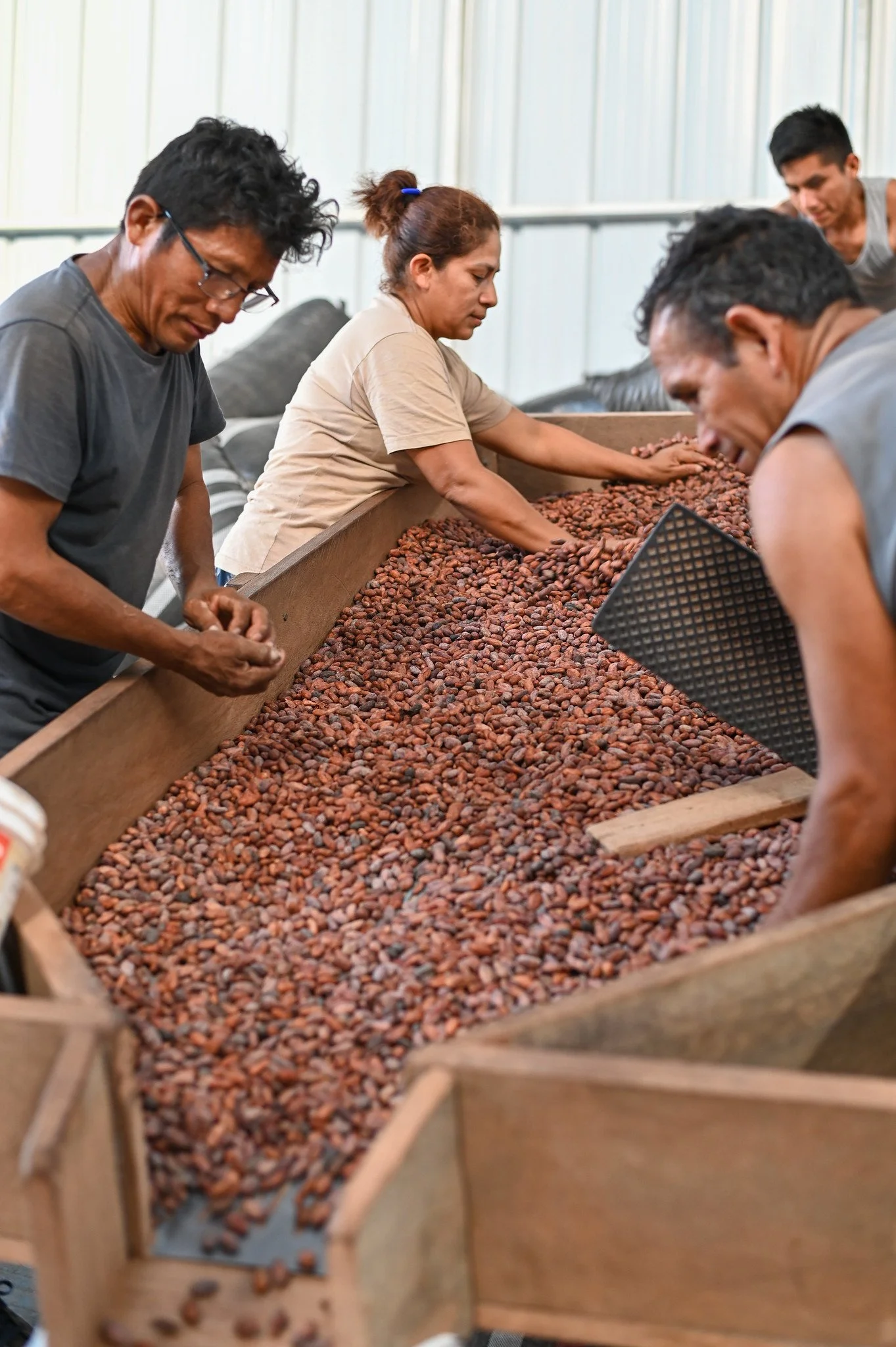
COAS workers sort raw cacao
In 2024, cacao prices reached historic highs worldwide. One of the main contributing factors was a dramatic drop in cacao production globally, mainly due to unfavorable climate conditions, including rising temperatures and heavy rainfall. While Peru and other producing regions in South America were affected, the impacts were particularly severe in Africa in Ghana and the Ivory Coast, two of the world’s largest cacao producers.
These weather fluctuations and the consequential disruptions to global cacao supply have had direct consequences for Peru, home to an estimated 120,000 smallholder cacao farmers that operate in rural, remote regions, such as Junín, Amazonas, and Madre de Dios. In these areas, access to technical support, climate-resilient practices, and higher-value markets is scarce, limiting producers’ ability to respond to and benefit from favorable market conditions.
In this context, support from well-organized cooperatives becomes critical. For smallholder farmers, having access to reliable technical assistance, certification, and stable buyers means being able to take advantage of market shifts to improve their and their families’ livelihoods.
COAS, an organic cacao cooperative supporting close to 600 small farmers in Peru
Located in Junín, Peru, Cooperativa Agraria Sonomoro del Vraem (COAS) supports a growing network of 570 smallholder farmers whose principal form of income is cacao. Working closely with these members, COAS focuses on improving cacao quality and market access through internationally recognized certifications, such as organic, Fair-Trade, and BioSuisse. By ensuring that the cacao it sources meets these standards, COAS can sell to local and international clients in Peru, Italy, Switzerland, Germany, and, more recently, France, commanding premium prices for its members.
This positioning and firm commitment to high-quality, sustainably sourced cacao has translated into tangible benefits for its producers. COAS members, 30% of whom are from local Indigenous communities, now earn up to 110% more than without the cooperative’s support.
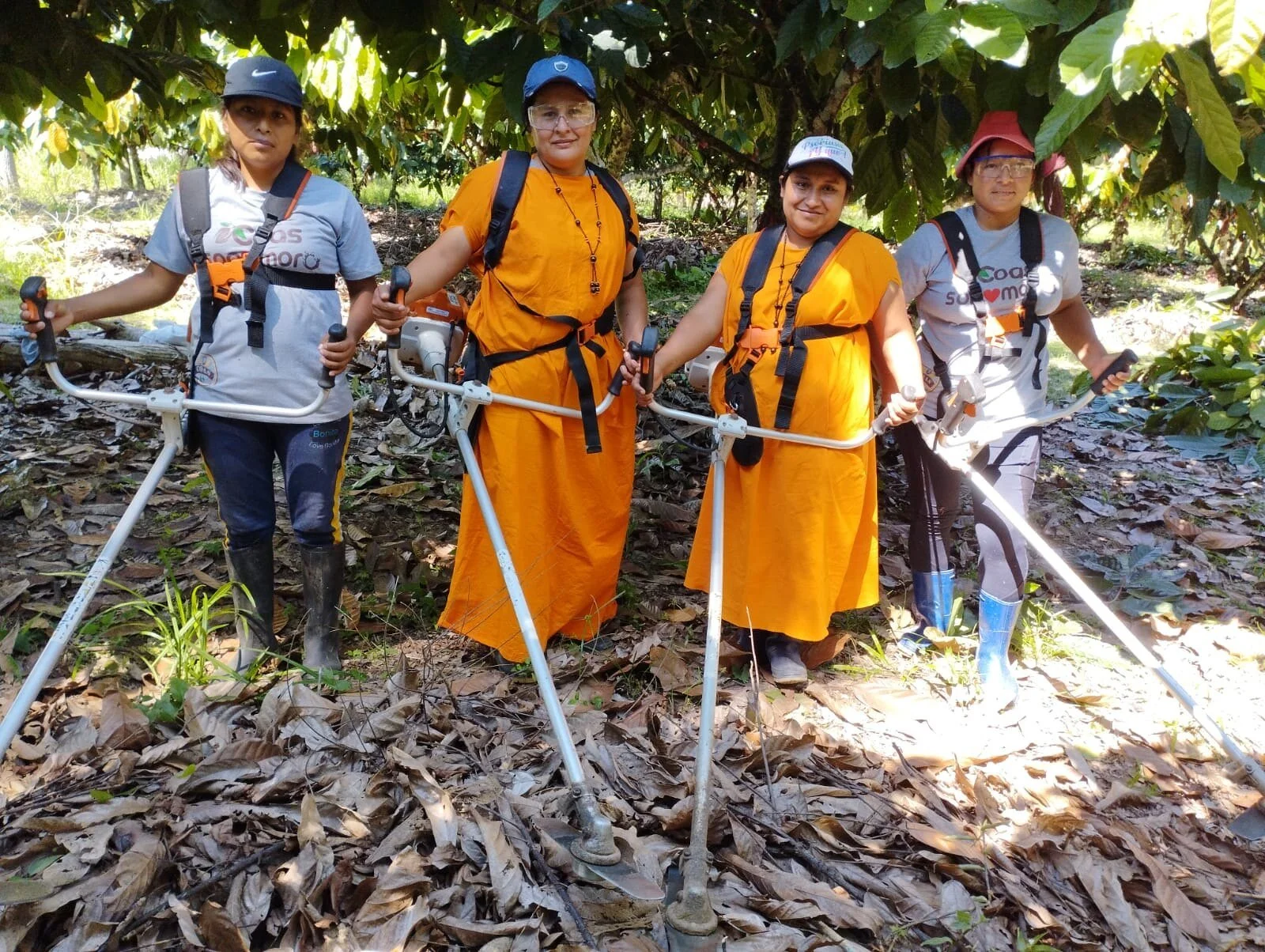
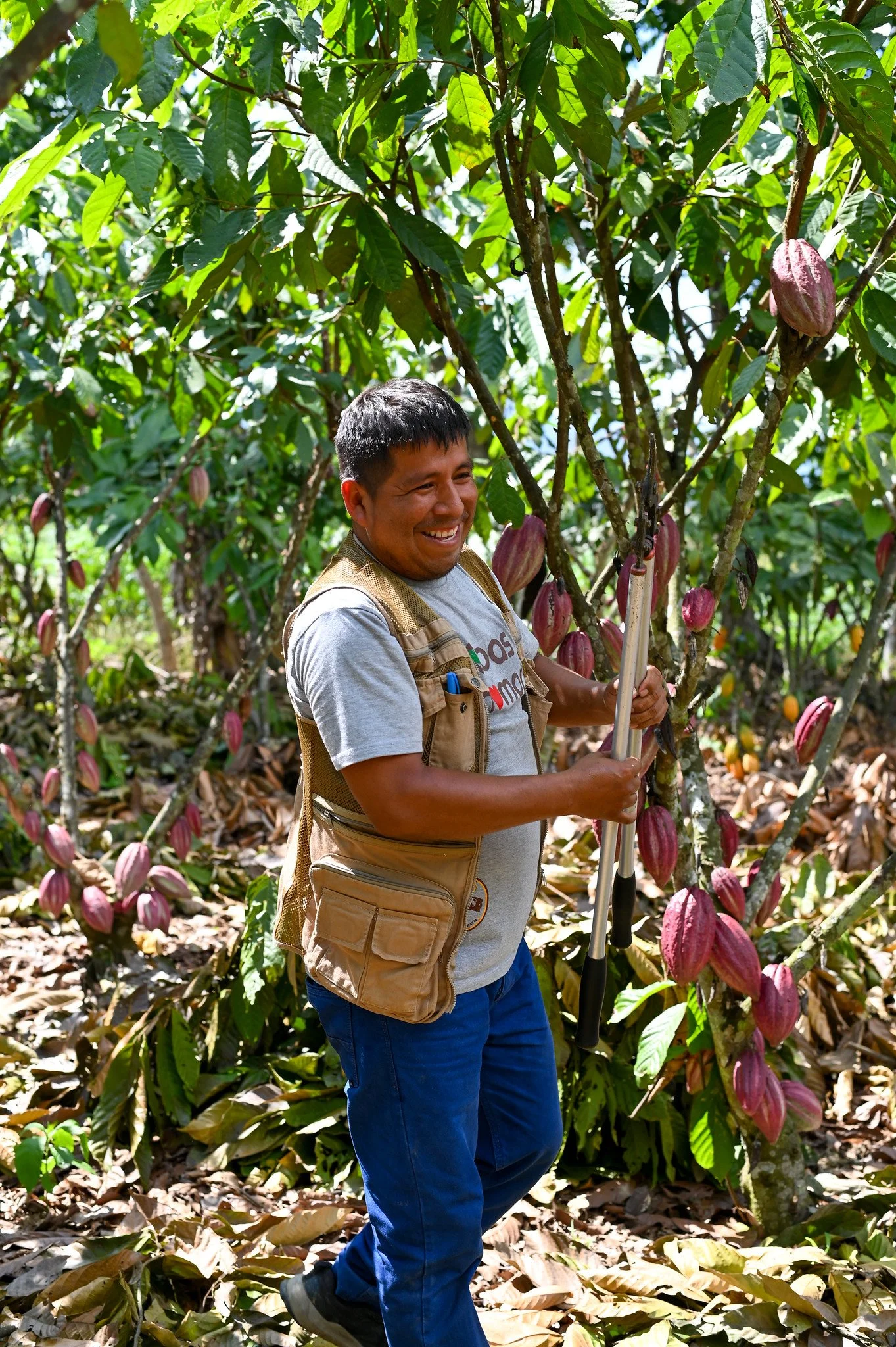
Beyond market access, COAS provides on-going training to strengthen farm productivity and climate resilience. Assistance covers composting, pruning, fertilizing with organic inputs, pest and disease management plans to ensure healthy crops, as well as material support such as water pumps, cacao seedlings, and on-site help to maintain their small farms over time. Since 2023, these efforts have contributed to members boosting their cacao production by 40% from approximately 1,000kg to 1,400kg per small farm.
Environmental stewardship is embedded in the cooperative’s operations. Through its environmental management plan, COAS provides farmers with technical assistance to conserve primary forests, soil, and water resources. Its reforestation initiatives in the Naylamp de Sonomoro valley have led to the planting of 1,500 trees with the active participation of its members.
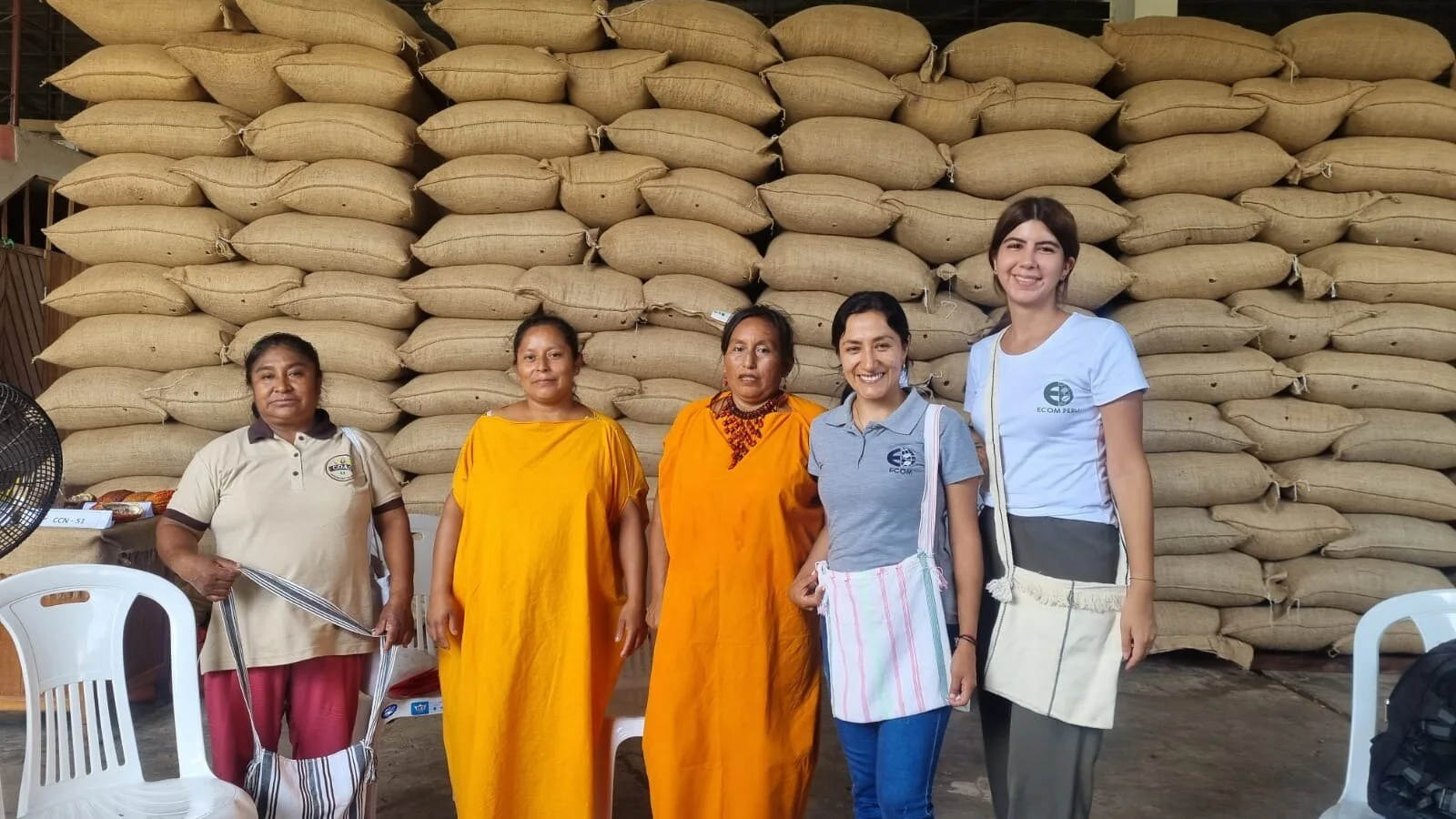
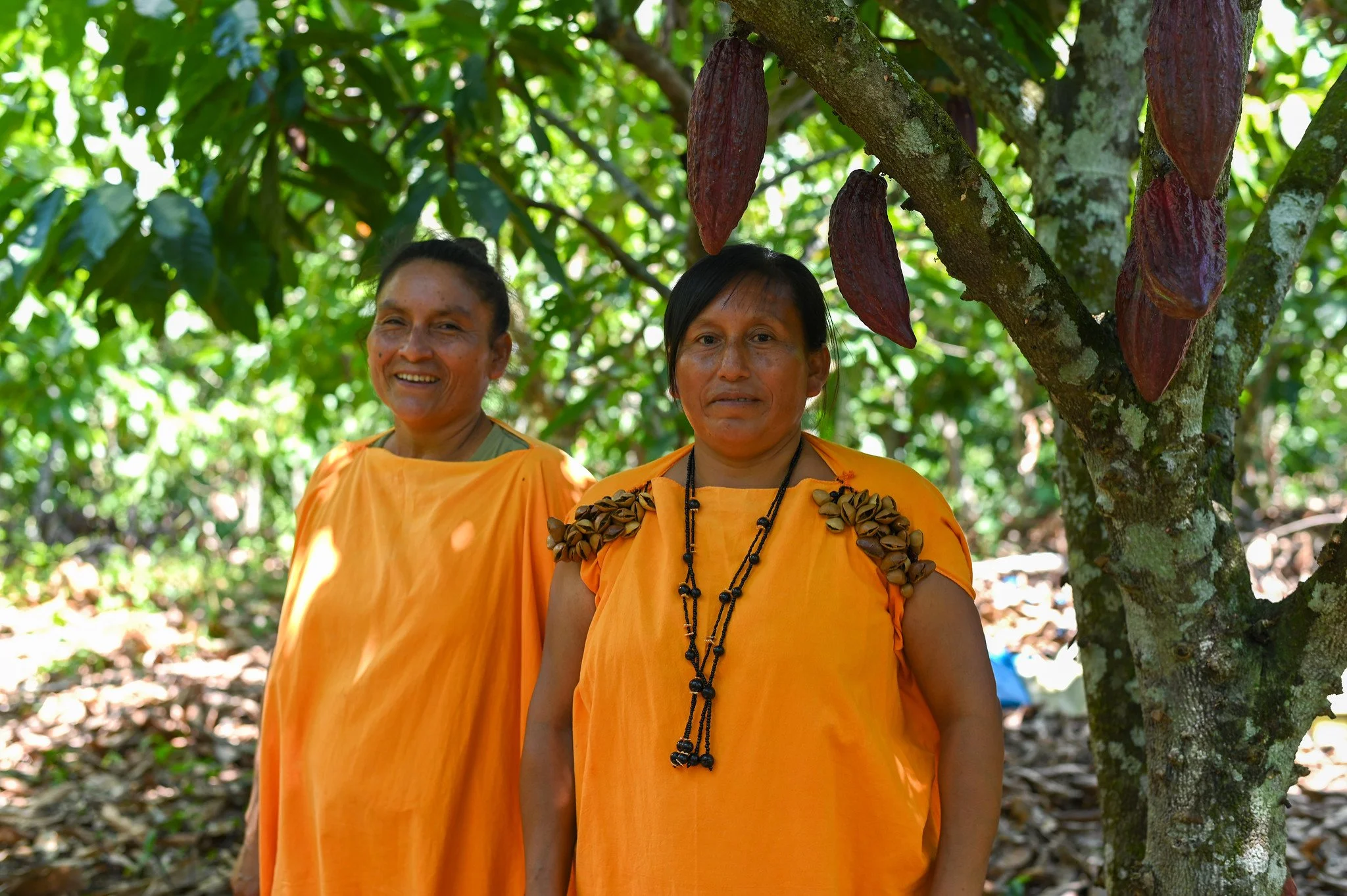
“NESsT’s significant financial assistance and continuous strategic support have had a remarkable positive impact on our cooperative’s growth. Not only have we been able to improve the lives of 512 families from Indigenous Asháninka, Nomatsiguenga, and immigrant settler communities, but it has also ensured sustainable employment for our members, including marginalized individuals like single mothers and elderly people.”
Sustaining a steady income for small farmers amidst funding uncertainty and a volatile market
COAS joined the NESsT Lirio Fund in 2023, accessing a revolving capital line to consistently source cacao from its members. In 2024, with the closure of USAID, COAS faced difficulties in securing funds from its recurrent lenders. NESsT stepped in to increase the active credit line, helping COAS to maintain steady payments to farmers while meeting the increased demand from international cacao buyers.
Against this backdrop of historically high cacao prices — which in Peru rose from approximately PEN 11 to PEN 30 per kilo — access to long-term, flexible capital became critical for COAS. To support the cooperative in leveraging these market conditions, the Lirio Fund extended a long-term loan for the construction of a new warehouse, with a tailored three-year repayment period. This investment strengthened the cooperative’s purchasing and processing capacity and improved quality control. As a result, COAS was able to increase order volumes with existing clients and sign commercial agreements with three new buyers in Europe, helping to secure stable income for its producers for the foreseeable future.
“COAS is a cooperative with the financial strength to face volatile market conditions and unpredictable climate patterns and the continued trust of new and old members. During its time in the Lirio Fund portfolio, it has experienced remarkable growth, increasing its sales from USD $2.5M to USD$15M and reaching new smallholder farmers in Junín – a region where meaningful technical support is scarce.”
Strengthening women’s economic independence in the cacao value chain
Alongside business assistance, a significant part of NESsT’s work with COAS has focused on advancing gender equity. With our support, the cooperative established a small plant to produce and sell cocoa derivatives primarily sourced from and processed by women. Many of these women are single mothers, heads of their families, and members of Indigenous communities for whom cacao is often their main source of income.
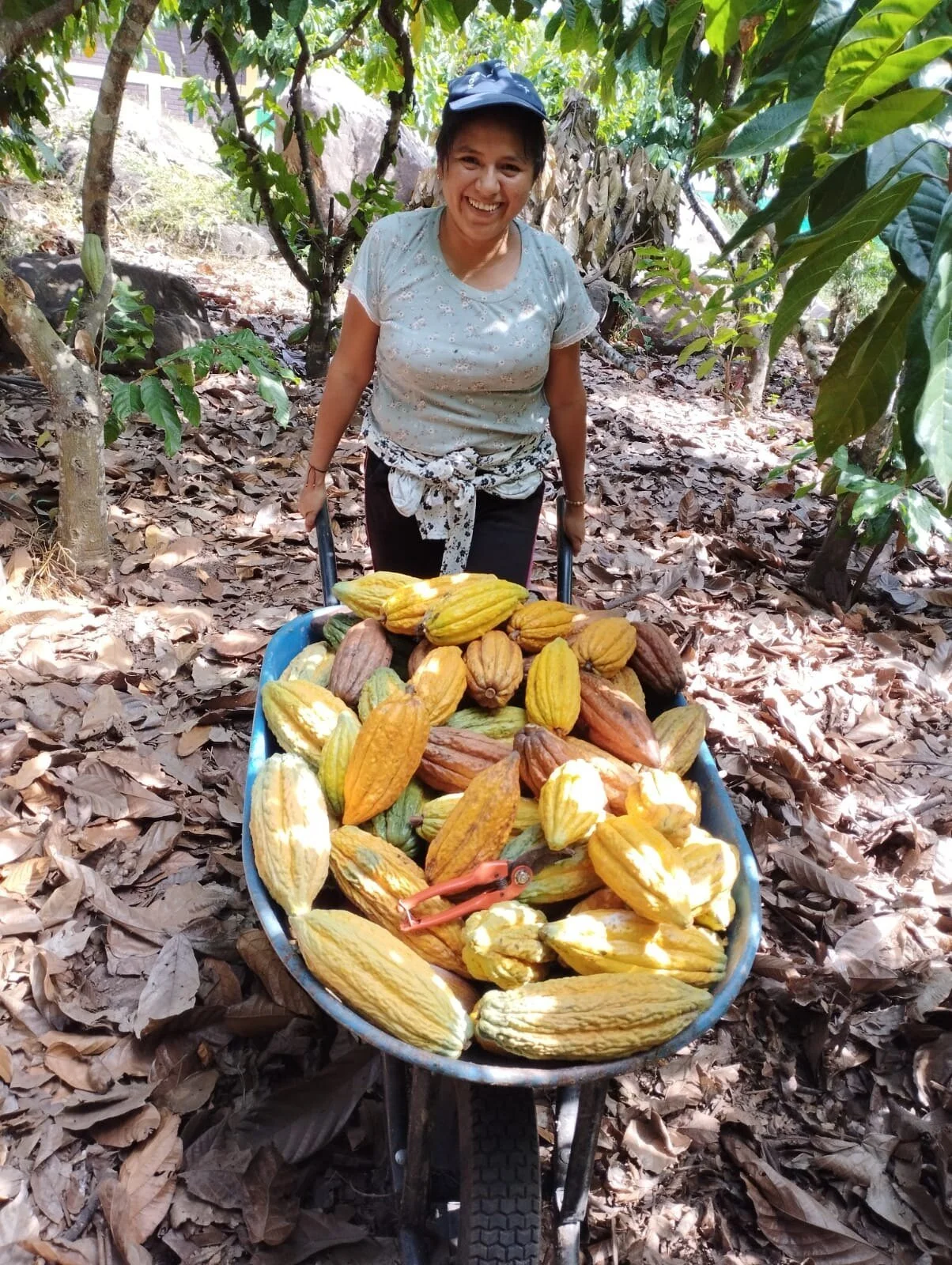
Smallholder producer collects raw cacao for COAS
One of these women is Katioska, who joined the cooperative as a cacao selector. After one year, she was promoted to the supply area in recognition of her commitment and willingness to learn about cacao production. Today, she is the sole provider for her two children after her husband was incarcerated.
Women currently represent 30% of COAS’ members, and the cooperative has trained and supported close to 150 rural women producers. Together with DEVIDA (the National Peruvian Commission for Development and Life without Drugs), COAS’ Women’s Committee actively promotes women’s participation across the entire cacao value chain. This includes identifying new women cacao producers and providing targeted technical training to women who COAS hires for processing and selection roles.
A renewed working capital line to COAS to meet the increasing global demand for cacao
Despite the challenges posed by price volatility and unfavorable weather conditions affecting cacao production in the region, COAS met all its repayment obligations to NESsT and continued to provide its members with meaningful technical support.
Based on this strong track record, NESsT renewed COAS’ working capital line in December 2025. This follow-on investment will allow the cooperative to continue providing new training to its members in areas such as regenerative agricultural practices for cacao trees and ensure timely payment for their cacao at premium prices in line with the increasing global demand.
Learn more about the Lirio Fund’s work, explore partnership opportunities, and apply for a loan below.
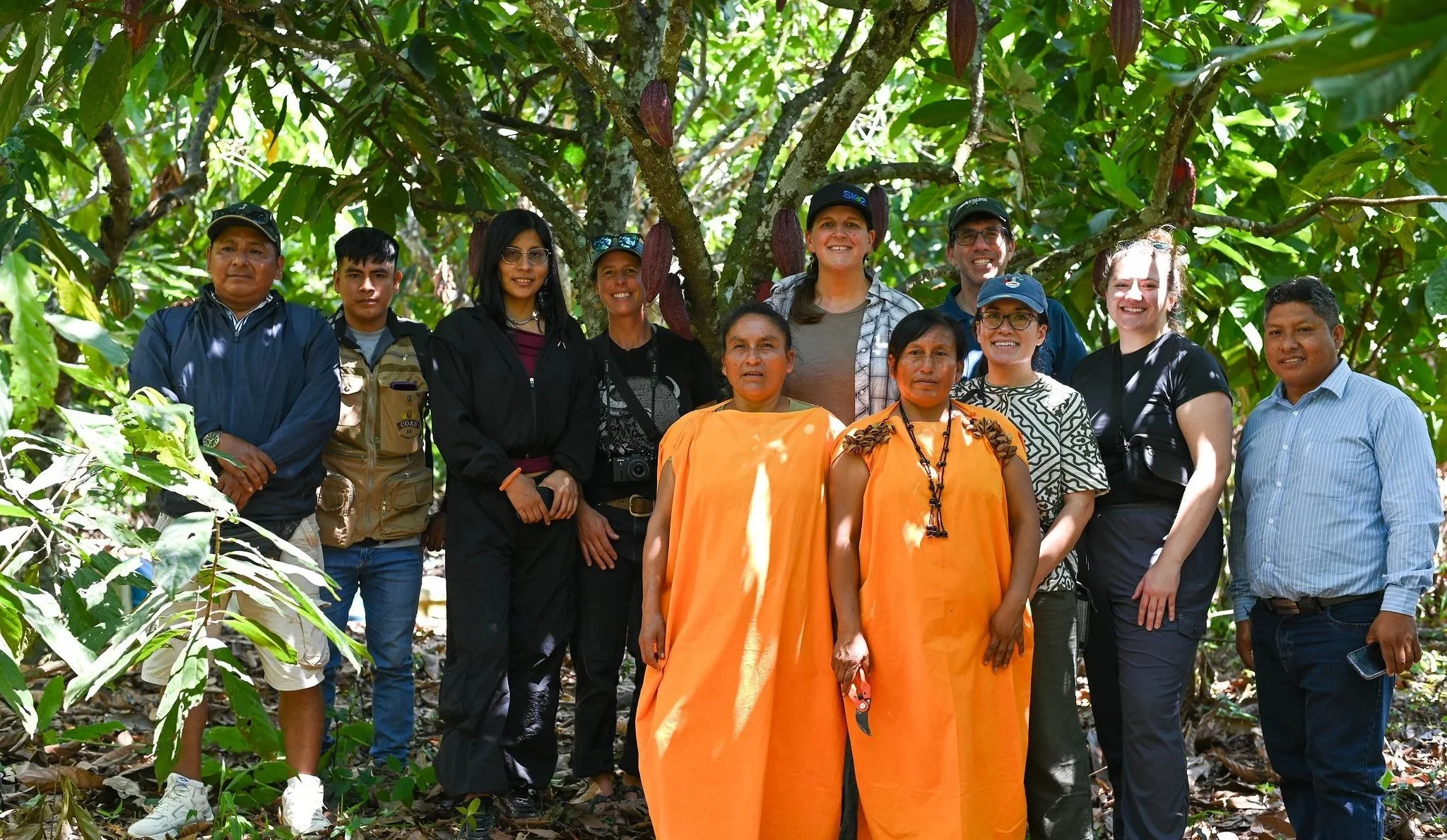
Cover photo: NESsT Lirio Fund team and global teams visit COAS in October 2025