COP30, held in Brazil and hosted in the Amazon for the first time, marked a turning point in global discussions on climate and development. One issue that came into sharper focus was financing for the Amazon, not only in terms of how much money is mobilized, but, more specifically, how this funding is structured and where it actually goes.
Against this backdrop, NESsT has been working more intentionally to bring local realities from the Amazon into global debates around access to financing. To explore these questions, we spoke with Cairo Bastos, Program Manager at NESsT Brazil, about his key takeaways from Belém, what it takes in practice to build development models rooted in local territories, and why financing for the Amazon is a topic that concerns taxpayers and citizens more broadly.
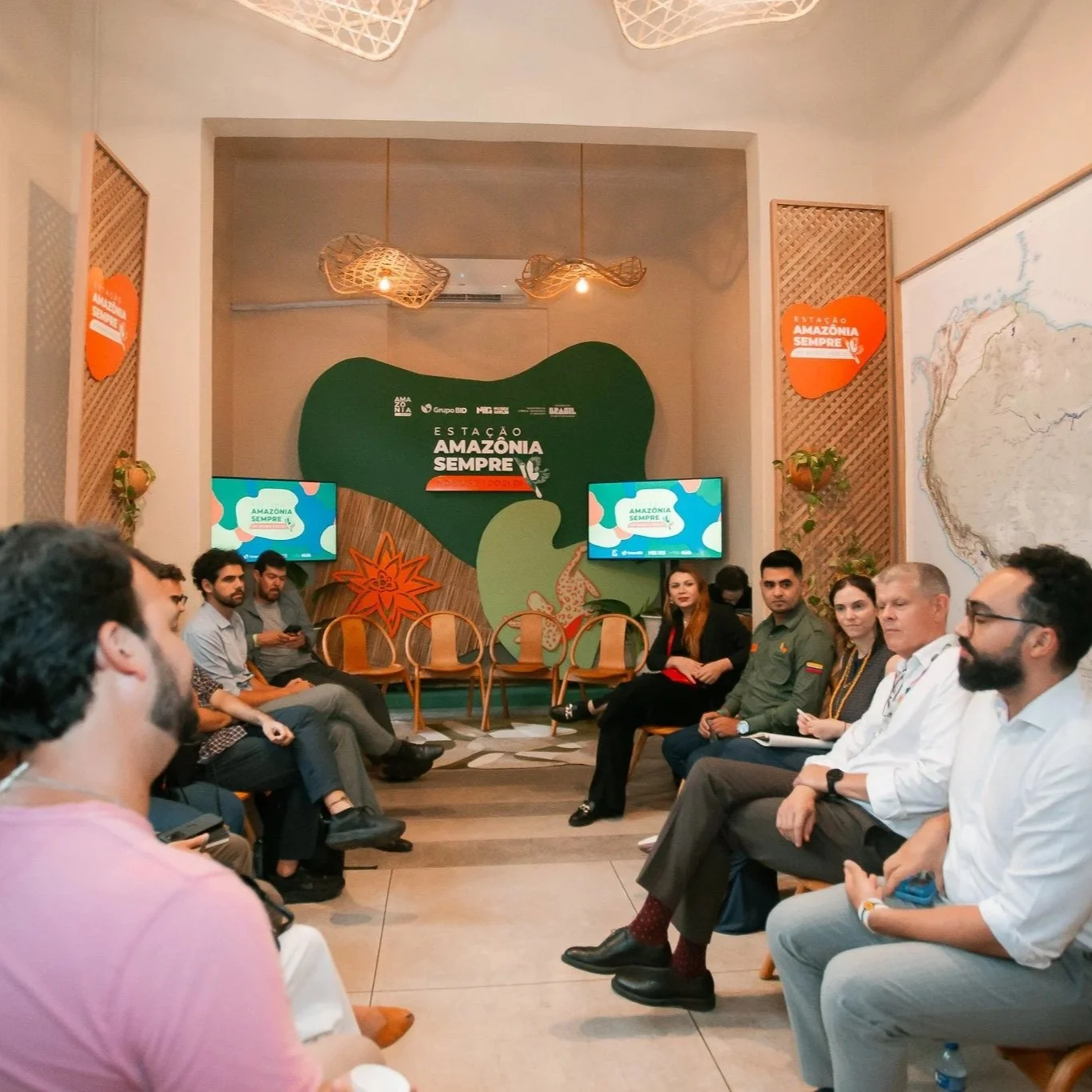
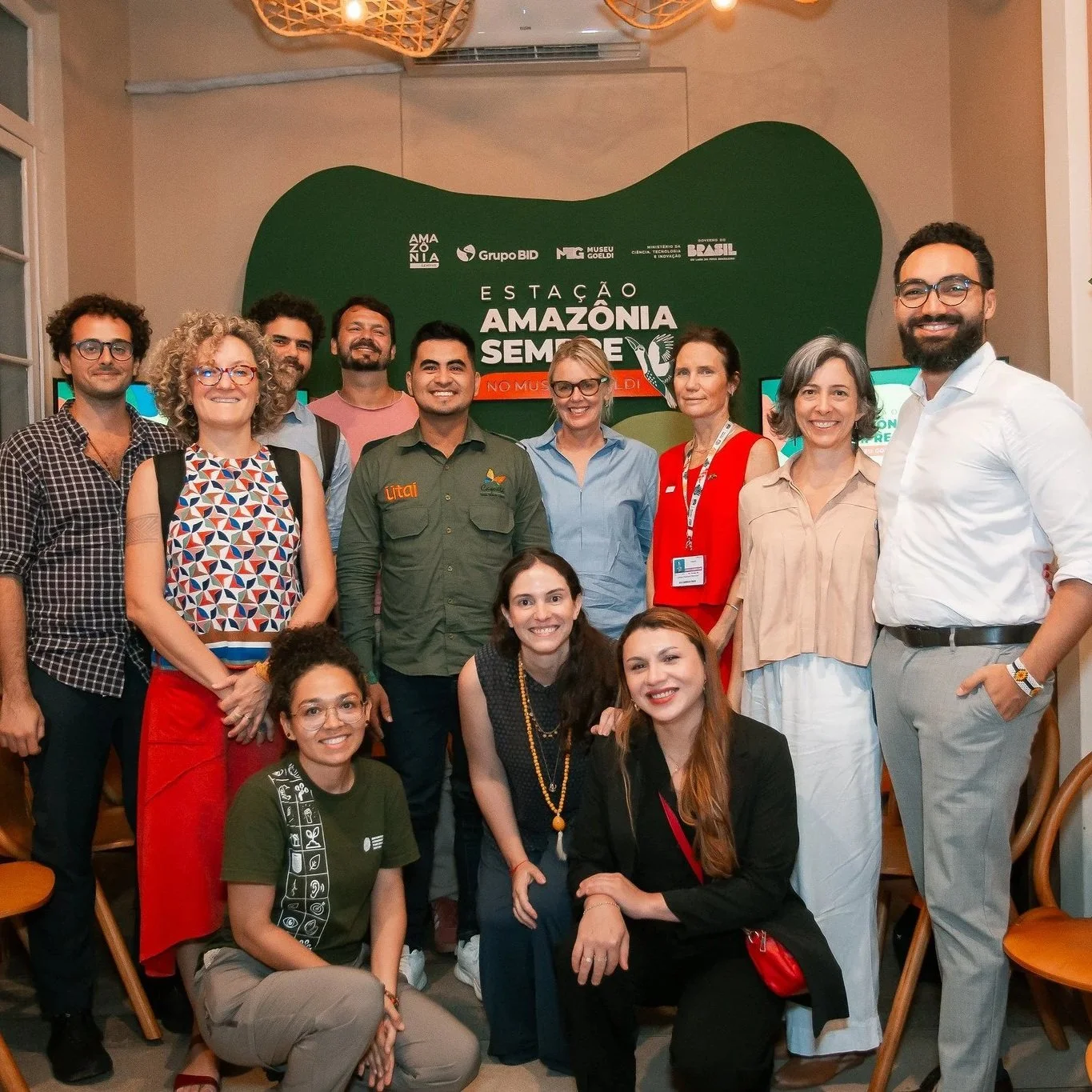
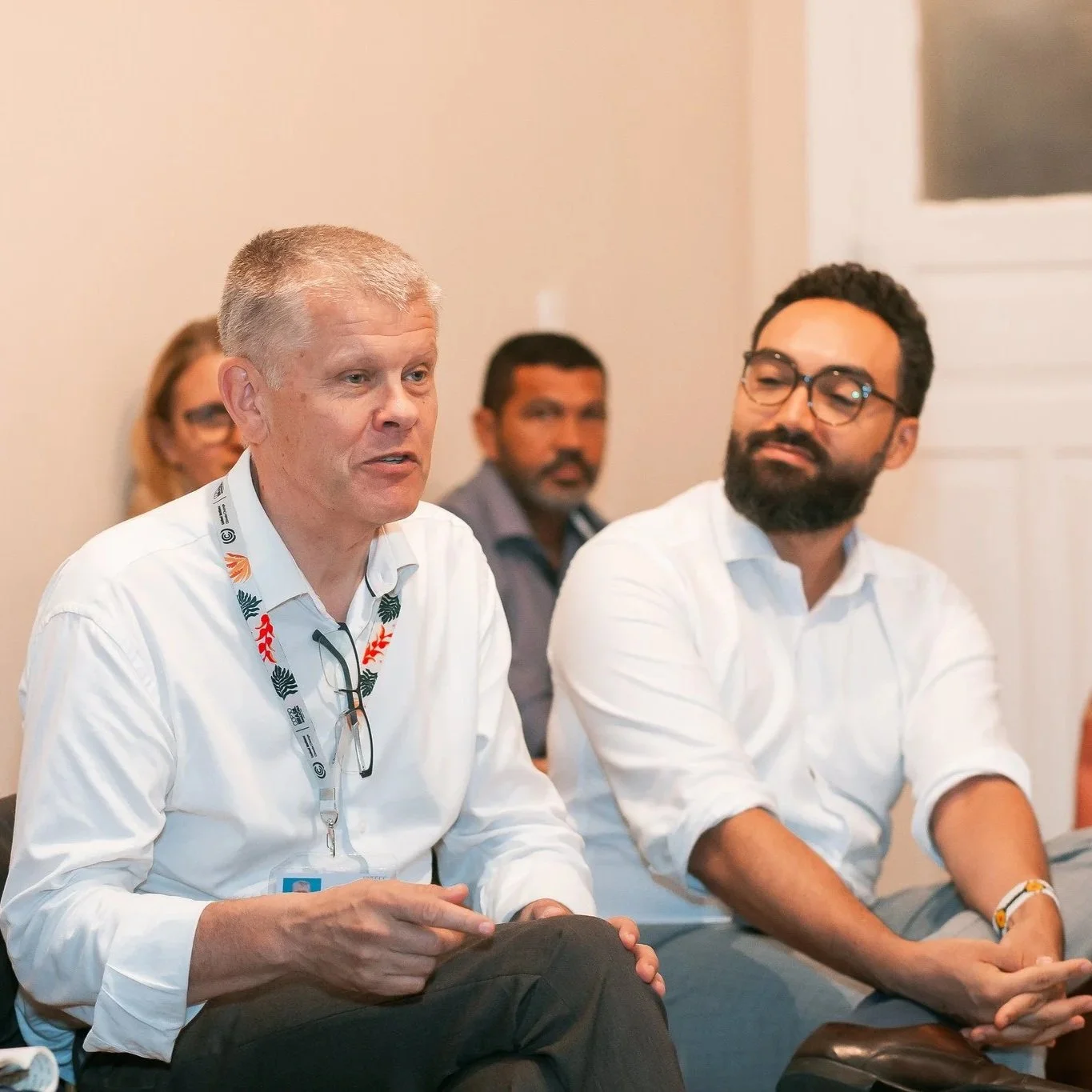
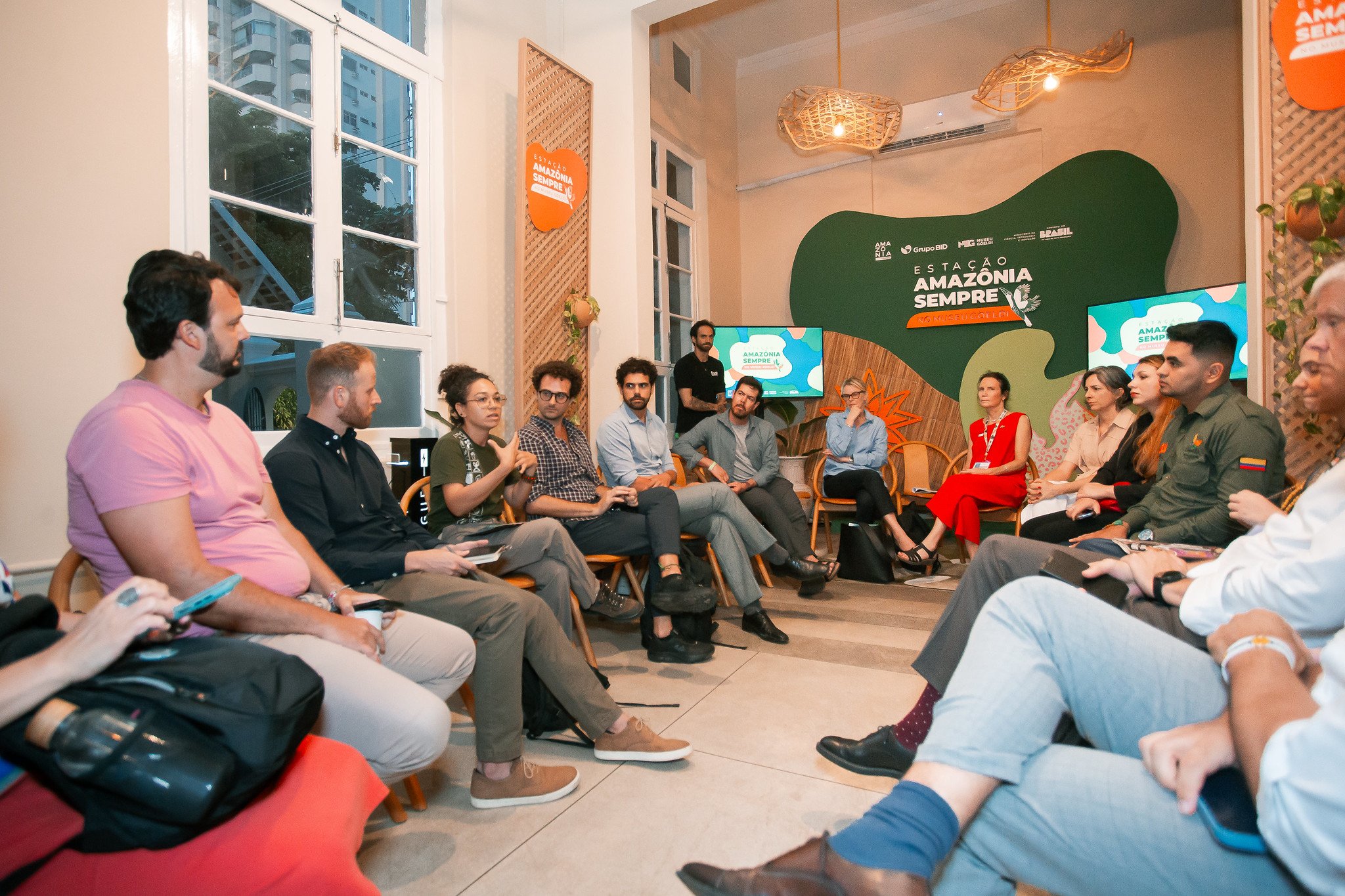
Photos: Solutions to Unlock Locally-led Financing – COP30 Panel
Discussions about financing for the Amazon often feel abstract or far removed from everyday life. Why should this topic matter to the average citizen or taxpayer?
Cairo: It can sound abstract, but financing for the Amazon affects people’s daily lives more than we often realize. Any time someone buys a house, uses a credit card, or looks for capital to start a business, they are interacting with the financial system. At its most basic level, that system connects people who have capital with those who need resources to consume, invest, or produce. Banks, investment funds, multilateral development banks, and regulators all play a role in that process. Protecting the Amazon depends heavily on how this system works. Conserving the forest requires resources on many fronts at the same time to ensure local communities are protected and have viable livelihoods; to support businesses that operate sustainably; and to sustain long-term conservation efforts at scale.
Municipal governments need funding to manage and protect their territories; states need resources to prepare for droughts and natural disasters; cooperatives want to grow; companies want to invest. All depend on access to finance. A large share of the money flowing into the Amazon today comes from public sources — in other words, from taxpayers. That’s where this stops being an abstract discussion.
Public funds are what capitalize institutions like Brazil’s development bank, BNDES, which finances projects in the region. Contributions from Brazil and other countries to institutions such as the Inter-American Development Bank also make Amazon-related investments possible. Public resources underpin many of the policies, funds, and programs focused on reforestation and regional economic activity.
So, the real question isn’t just how much money is being invested, but how it’s being used and who it benefits. Is it helping to keep the forest standing, generate local income, and reduce inequality? Or is it supporting activities that damage ecosystems and concentrate wealth? When public resources are directed, for example, toward oil exploration near the mouth of the Amazon River, despite the well-known environmental risks, it’s fair to ask whether this reflects the future we as Brazilian citizens want for the region.
In the end, talking about financing for the Amazon is really about choosing a development model: deciding who benefits from it and what kind of legacy we leave for the next generations.
How has NESsT been working on this agenda? In 2024, you published a report with recommendations for funders. Can you explain what that was about?
Cairo: NESsT began engaging more deliberately in the debate around financing for the Amazonian socio-bioeconomy in 2022. In fact, that was one of the main reasons I joined the organization. The initiative grew out of our founder and former CEO Nicole Etchart’s vision. She recognized that because NESsT sits between funders and community-led businesses, we could go beyond providing direct support to enterprises and start to help bring these two worlds closer together. In practice, this has looked like facilitating dialogues and contributing to financing models that actually work for local territories.
On the one side, we were hearing from businesses that struggled to access national and international financing. On the other, funders often pointed to a lack of “maturity” among enterprises as a barrier to giving them funding. This was our starting point, simply listening and spending time with the leaders of the businesses in our portfolio, understanding their experiences, and documenting the challenges they face and their recommendations for improving the system.
This step was an intensive listening process, which we carried out one-on-one and in group settings, and complemented by interviews with professionals from multilateral banks and development agencies. These insights informed the report we published in 2024 and continue to guide our recommendations today.
What were the main findings of the report?
Cairo: The central finding is that while the Amazonian bioeconomy has enormous economic and environmental potential, most financing decisions still fail to adequately meet the needs of Indigenous Peoples and local communities who are leading sustainable solutions in Amazonian territories.
Our main recommendation is that public and private investors rethink how their financing mechanisms are designed to improve focus, accessibility, effectiveness, and efficiency by placing the voices and priorities of local communities at the center of investment decisions.
The report is grounded in concrete evidence drawn directly from communities and businesses in the Amazon. It’s not theoretical. It reflects real experiences and shows what works, what doesn’t, and why.
What are the main barriers to financing the socio-bioeconomy that you identified?
Cairo: According to the community leaders and producers we interviewed, the barriers are largely structural and bureaucratic. They show up in fund requirements, rigid financial instruments, and, above all, in how little the real value created by community-led businesses is recognized.
These enterprises don’t just produce food or raw materials. They generate environmental conservation, cultural continuity, territorial governance, clean water and air, and long-term stewardship of natural resources. Yet these benefits are rarely reflected in conventional financial assessments. On top of that, the collateral requirements often don’t match territorial realities, repayment timelines don’t align with forest production cycles, and financial products tend to be overly rigid.
The issue isn’t a lack of local capacity, it’s that the financial systems in place are poorly equipped to deal with the complexity of the Amazon.
What does NESsT propose to help funders better value the sociobioeconomy?
Cairo: One of our key strengths is our ability to assess, track, and communicate impact in a consistent way. When we support businesses in collecting data and building clear impact narratives, they gain a stronger understanding of their role in the transition to a low-carbon economy and are better prepared to access larger and more diverse sources of capital.
We also provide in-depth mentoring that strengthens management, governance, and financial strategy. This helps enterprises engage more confidently with different types of funders and financing instruments.
If NESsT advocates for more direct financing, doesn’t that risk weakening your role as a “bridge”?
Cairo: (Laughs) That’s a question we hear quite often, and more often than not it reflects a narrow view of what civil society organizations do. We exist to mobilize people, resources, and knowledge around shared goals. Our focus is on expanding dignified work and income by supporting impact-driven businesses to grow.
Even when we advocate for direct financing, our role doesn’t disappear — it evolves. We continue to work systemically, building bridges between territories, capital, and public policy. There will always be enterprises that need patient capital, technical support, and time to grow. That’s where we remain relevant: acting as catalysts for social and environmental impact.
We wrapped up 2025 with the world’s largest climate event taking place in Brazil, in Belém, the first time an event of this scale was held in the Amazon. One of the most discussed topics was financing for the region. What stood out most?
Cairo: Two things were especially significant. The first was progress around new long-term financing mechanisms, such as the Tropical Forests Forever Facility (TFFF). The idea behind the TFFF is to provide predictable payments to countries that keep their forests standing, treating conservation as a core economic strategy rather than a side benefit.
Unlike traditional funds, the TFFF aims to raise around R$125 billion on the market at relatively low interest rates, positioning itself as a low-risk asset. These resources would then be invested in projects with higher returns, generating a financial spread. Part of that spread would be directed to countries with tropical forests, proportional to the area they preserve, while investors would be repaid with returns. In theory, this model creates conditions for sustainable development in local communities and allows forest countries to generate revenue through conservation.
It represents a fairer way of recognizing the economic value of the environmental services forests provide, even though there is still work to be done to ensure these resources reach communities directly. The second key development was the strengthening of the debate around direct financing for Indigenous peoples and local communities, with clearer commitments to ensure resources actually reach those who protect the forest on a daily basis.
And what was NESsT’s role at Belém?
Cairo: It was encouraging to see the sociobioeconomy take center stage at COP30, shifting from an abstract concept to a practical agenda. The conversation moved to more concrete questions: how to structure patient capital, hybrid financial instruments, and public policies that can support local businesses at scale. That’s where our work at NESsT stood out. We acted as a bridge between global discussions and territorial realities, bringing forward concrete experiences from sociobioeconomy businesses in our portfolio, many of which are led by Black, Indigenous, and women entrepreneurs and are generating real impact and decent income in the Amazon. We were able to show that solutions already exist.
What’s missing are financial instruments that are actually suited to these realities. COP30 reinforced the idea that financing the Amazon is not only a climate strategy, but also a social and economic one, and that’s exactly where NESsT operates.
Why is the direct presence of community leaders in decision-making spaces so important?
Cairo: Representation matters, but it’s qualified participation that drives change. When Indigenous and community leaders take part in forums like COPs, the G20, or the Amazon Summit, they influence narratives, priorities, and even the design of public policies and financial mechanisms.
How has this played out in practice recently?
Cairo:In very concrete ways. We supported our portfolio enterprises CooperSapó, Manejebem, and Plantus to attend and speak at the Brazil Amazon Summit in Manaus, and Agrosolidaria, a Colombia-based enterprise, in market-focused agendas in Sweden. We also supported visibility initiatives, like the presence of Indigenous products from ABEX at Brazil’s National Handicrafts Fair in December 2025.
At COP30 specifically, we contributed to Ricardo Calderón (Agrosolidaria), Keivan Hamoud (ASSOAB) and Ngrenhkarati Xikrin (ABEX), obtaining speaking roles on bioeconomy panels, where they engaged in and learned from key discussions shaping climate finance.
Can you talk to us about NESsT’s role within the Pan-Amazon Network?
Cairo: It covers both scale and policy influence. Since 2023, we have co-led the Access to Finance Task Force alongside the Amazon Investor Coalition, helping align expectations and showing that investing in the sociobioeconomy is viable, as long as capital is willing to learn and adapt.
What has been your main takeaway from this process?
Cairo: That Indigenous and community leaders are ready to make decisions about financing. The bottleneck lies in financial structures that remain rigid and insufficiently open to listening.
And what is NESsT’s role moving forward?
Cairo: To continue being a bridge between capital and territory, between global policy and local reality. Our commitment is to a development model that grows out of the forest, values local leadership, and responds to the global challenges of today and tomorrow.
This blog is part of a series exploring the insights, key themes, and approaches that drive NESsT’s publication ‘Unlocking the Potential of the Global Financing Ecosystem to Invest in a Sustainable Bioeconomy in the Amazon from the Perspective of Local Communities’. Informed by Amazonian voices and conversations with the global financing community, the report identifies nine recommendations across two key areas for impact-focused public and private investors to improve the targeting, efficacy, and efficiency of their funding to the Amazon bioeconomy. Through this ten-part series, we aim to bring these opportunities into broader conversations and diverse discussion spaces, amplifying the reach of Amazonian communities and their voices, experiences, and solutions.