For many of the social enterprises that form part of our portfolio, funding alone is not enough to grow and sustain their business and its impact. Social entrepreneurs also need non-financial resources like expertise, networks, and tools that many corporates already have at hand.
For this reason, a key component of our accelerator programs with IKEA Social Entrepreneurship is IKEA co-worker engagement, where IKEA co-workers are matched with social enterprises to support their scaling journey.
These opportunities take the form of mentorship, coaching, group sessions facilitation, and strategic guidance— structured knowledge exchange that supports social enterprises in sharpening and executing their strategies, while IKEA co-workers expand their leadership, awareness of social impact, and innovation capacity.
In this interview, we speak with Mihai Cepoi, Chief Everything Officer, Jobful, the company behind Romania’s largest employment platform for people affected by the war in Ukraine – jobs4ukr.com – and IKEA co-worker Rumen Mihaylov, Insights Capability Leader, Inter IKEA Group, whose exchange grew out of the NESsT - IKEA Social Entrepreneurship Accelerator Program in Central and Eastern Europe. What began as a structured mentoring relationship quickly evolved into a space for honest dialogue, shared learning, and unexpected friendship.
Interviewer: Mihai, looking back to 2016, when you first started Jobful, what does it represent for you today, and how do you feel it has evolved over the past nine years?
Mihai: Looking back, the past nine years represent roughly a third of my life. When we started in 2016, Jobful was initially a gamification agency. We then pivoted to a marketplace for Romania, followed by another pivot that transformed Jobful into a SaaS recruitment platform. Along the way, we navigated major external events—the pandemic and the war in Ukraine—which became important milestones in our journey.
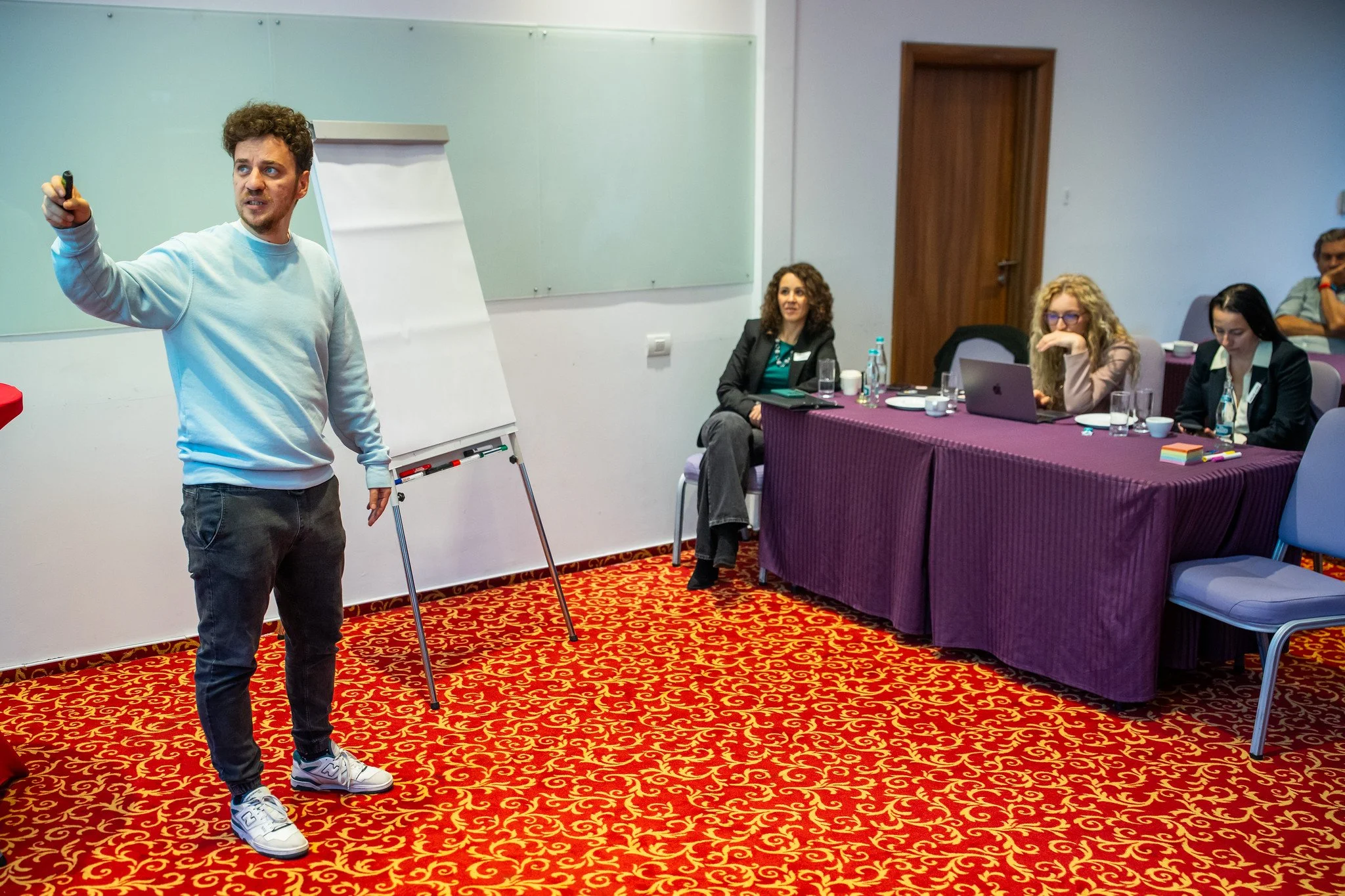
Mihai Cepoi discusses Jobful’s impact with attendees of the NESsT Romania portfolio gathering in October 2025
Interviewer: Before founding Jobful, you were a professor and later worked with large companies such as Microsoft, SAP, and Vodafone. How did this background shape your transition into entrepreneurship?
Mihai: Prior to founding Jobful, I was indeed a professor and worked as a project and product manager, later joining Microsoft and SAP in enterprise roles. At a certain point, these paths began to overlap. Even before joining SAP, I had already started building the company together with a group of friends. For about two to three years, I worked in parallel—full time in corporate roles and, in the evenings and weekends, on developing Jobful. Seeing the market’s reaction and realizing that what we were building was genuinely making a difference gave me the confidence to move fully into entrepreneurship.
Interviewer: Could you tell us about the moment when you made the transition from being an employee to becoming an entrepreneur?
Mihai: During my second year at SAP I realized that my company was growing and that committing to it full time would make a real difference to its development. In hindsight, it was one of the most naive yet significant decisions of my life. I was working for an impressive corporation, with a strong salary package and many benefits, and relatively low pressure. Suddenly, I became the person responsible for everything that didn’t get done in the company—from ensuring salaries were paid on time to handling many other responsibilities that come with running a business.
Interviewer: Mihai, have you always been inclined toward entrepreneurship, particularly social entrepreneurship?
Mihai: Yes. During my university years, I was already involved in activities with a strong social component, teaching IT to young children and volunteering with a student NGO. Even earlier, I was building websites, driven by the desire to create something that didn’t exist before. Looking back, I realize I’ve always been motivated by having a positive impact on people and society.
“Looking back, I realize I’ve always been motivated by having a positive impact on people and society.”
Interviewer: Rumen, from your perspective, how important is it to have a mentor?
Rumen: Looking at my own experience, mentoring has played a significant role. There are many ways in which mentoring works. For example, as parents, we often take on a mentoring role with our children. The same happens in the workplace, in social systems, and in relationships more broadly. Mentoring is one of the ways experience is passed on. At the same time, for the mentor, it is also a way to stay connected to an ever-changing world. From my perspective, it is truly a win-win relationship.
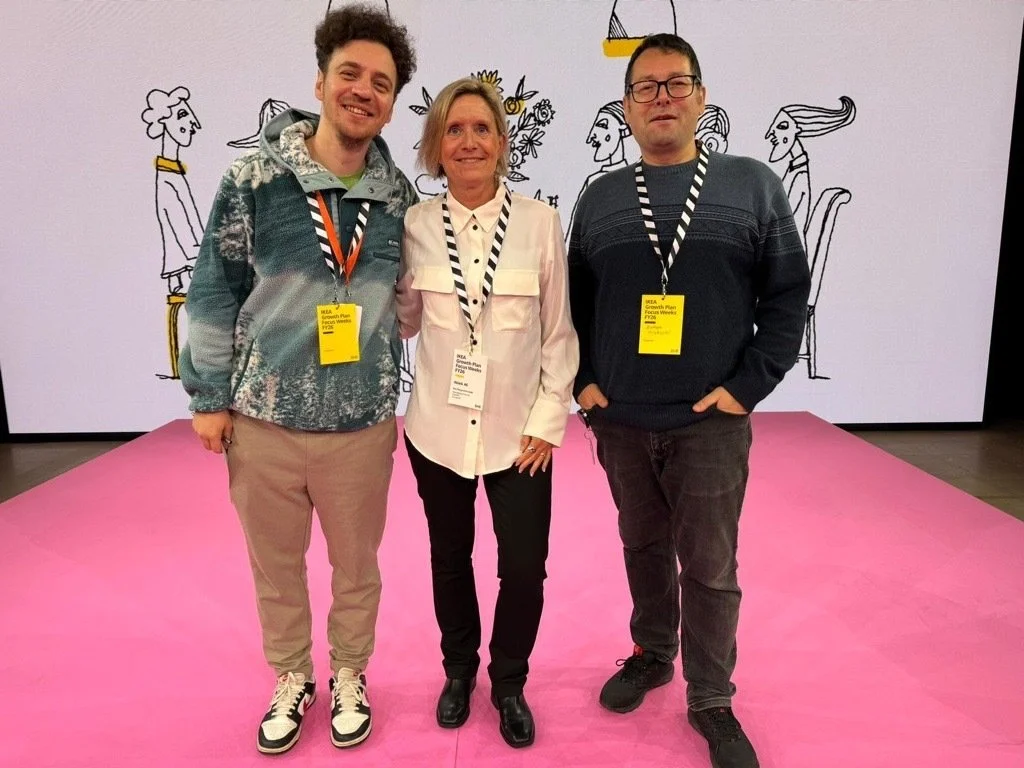
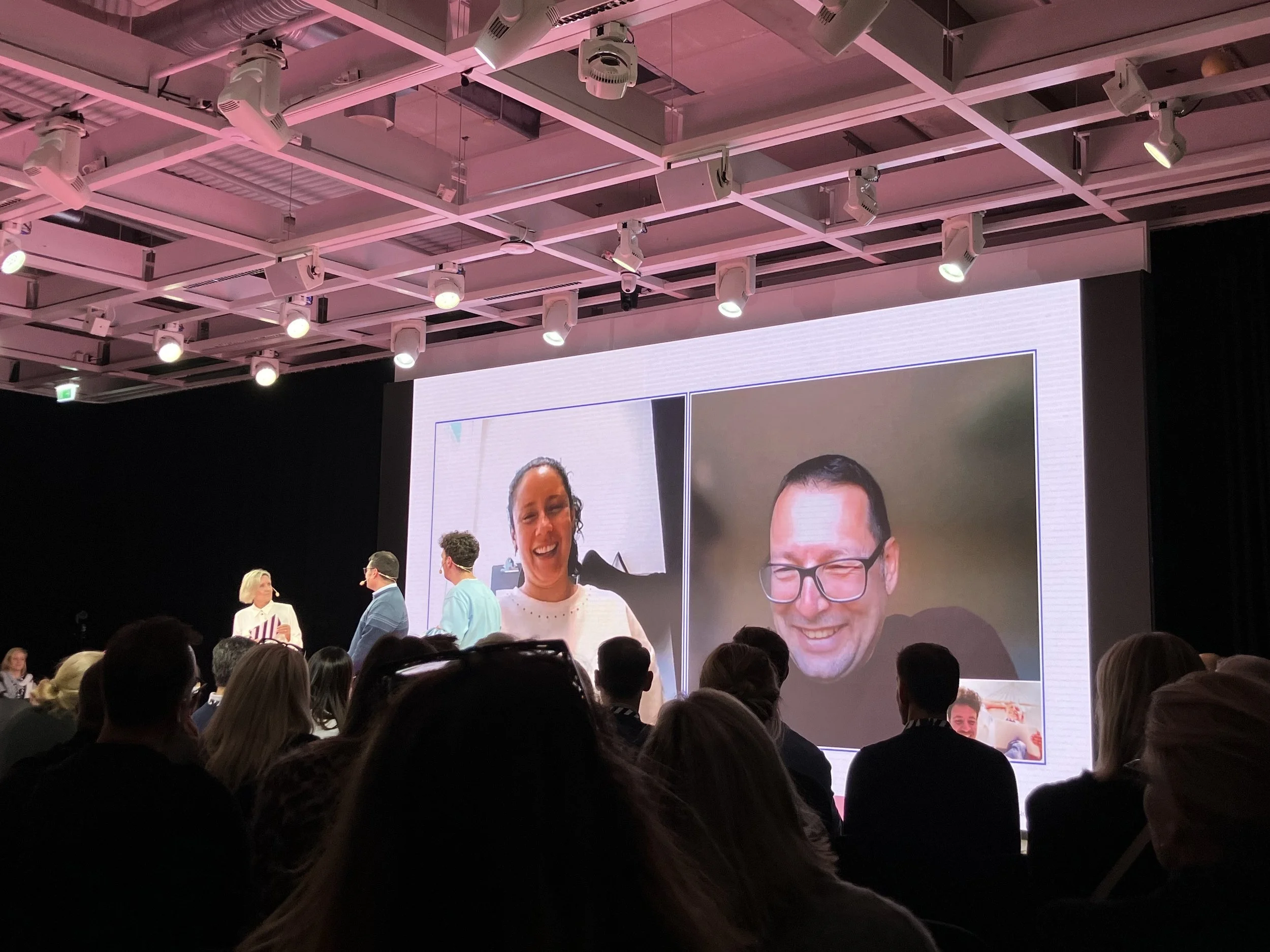
Photos: Mihai Cepoi, Åsa Skogström Feldt (Managing Director of IKEA Social Entrepreneurship), and Rumen Mihaylov
Interviewer: Mihai, you mentioned to me previously that you tend to surround yourself with experts especially in areas where you feel you need additional knowledge—such as marketing or testing. How important was mentorship for you at the beginning of your journey in the NESsT - IKEA Social Entrepreneurship Accelerator Program?
Mihai: At the beginning, Rumen helped me understand how large organizations operate—how decisions are fragmented across regions and countries, and how different approaches coexist within enterprises. What became truly valuable during our interactions, however, was not just the information itself, but Rumen’s way of thinking. He helped me better understand my challenges and, rather than offering ready-made solutions, he provided a framework for thinking—one that allowed me to find my own solutions.
“Mentoring is one of the ways experience is passed on. At the same time, for the mentor, it is also a way to stay connected to an ever-changing world. From my perspective, it is truly a win-win relationship.”
Interviewer: When did you start receiving mentorship from Rumen, and how did this mentorship relationship begin?
Mihai: That was powerful from the very beginning, and it’s why our relationship evolved into a mentorship and coaching dynamic that lasted for more than a year. I vividly remember the first time we met in person…it felt like meeting a friend I had known for the past twenty years. While most of our discussions—perhaps around 80%—focused on professional topics, there was also a strong personal connection, which I continue to value deeply. It felt more like visiting a friend than attending a business conference or presentation.
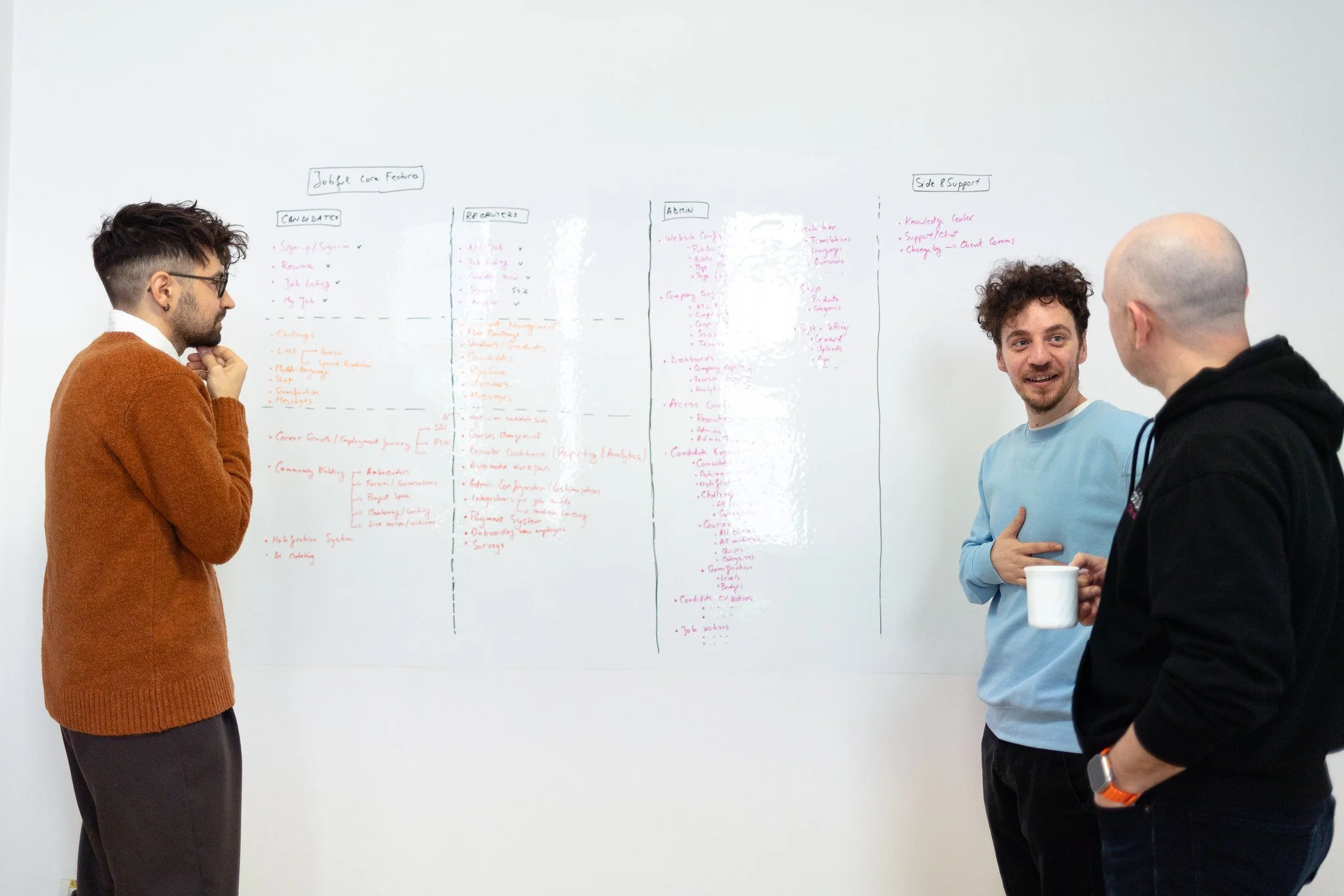
Mihai Cepoi (second from right) with Jobful employees
Interviewer: From your perspective, what did each of you gain from this mentorship relationship?
Rumen: There was also the fact that both Mihai and [NESsT portfolio manager] Dumitru are Romanian, which naturally made communication easier and created a sense of mutual understanding. We even joked about that at the beginning. Of course, I’m Bulgarian, so there are differences, but also many similarities. What really mattered, however, was that we chose to start from common ground. Nationality was not the main reason we were matched. This was particularly interesting for me because, while IKEA is a very strong organization, it is also highly structured and not young or growing in the same way.
Looking back at our relationship of more than a year, I can honestly say that I learned a great deal from you, Mihai. You lead with a big heart. I genuinely believe the world needs more companies like this, and I’m very grateful to have been part of this journey.
Interviewer: Rumen, you have taught project management in several countries, including Bulgaria, Germany, Italy, and Sweden. From your point of view, how important is global dialogue and international cooperation today?
Rumen: It is even more important today than it has ever been. I believe it has always been important, but if we look at history, humanity has been at its best during times of cooperation, trade, exchange, and shared learning—rather than during times of conflict and confrontation. There are strong forces pushing toward greater collaboration and openness, but there are also significant forces pushing in the opposite direction. Ultimately, it becomes a matter of choice: choosing what kind of world we want to live in and help shape.
“Looking back at our relationship of more than a year, I can honestly say that I learned a great deal from you, Mihai. You lead with a big heart. I genuinely believe the world needs more companies like this, and I’m very grateful to have been part of this journey.”
Interviewer: Mihai, how valuable is having an international perspective in your work?
Mihai: I deeply value working with people who make a difference, especially those with international and cross-sector experience. This human-centered approach—what Rumen described as leading with a big heart—is real, even if it can sometimes be challenging from a business perspective.
One of the biggest values I gained from our relationship, Rumen, was the constant reflection on the different people we interact with in business—customers, investors, teams—each with their own expectations and pressures. Seeing people like Rumen—experienced, successful, and impact-driven—operating from this same mindset was a powerful validation for me.
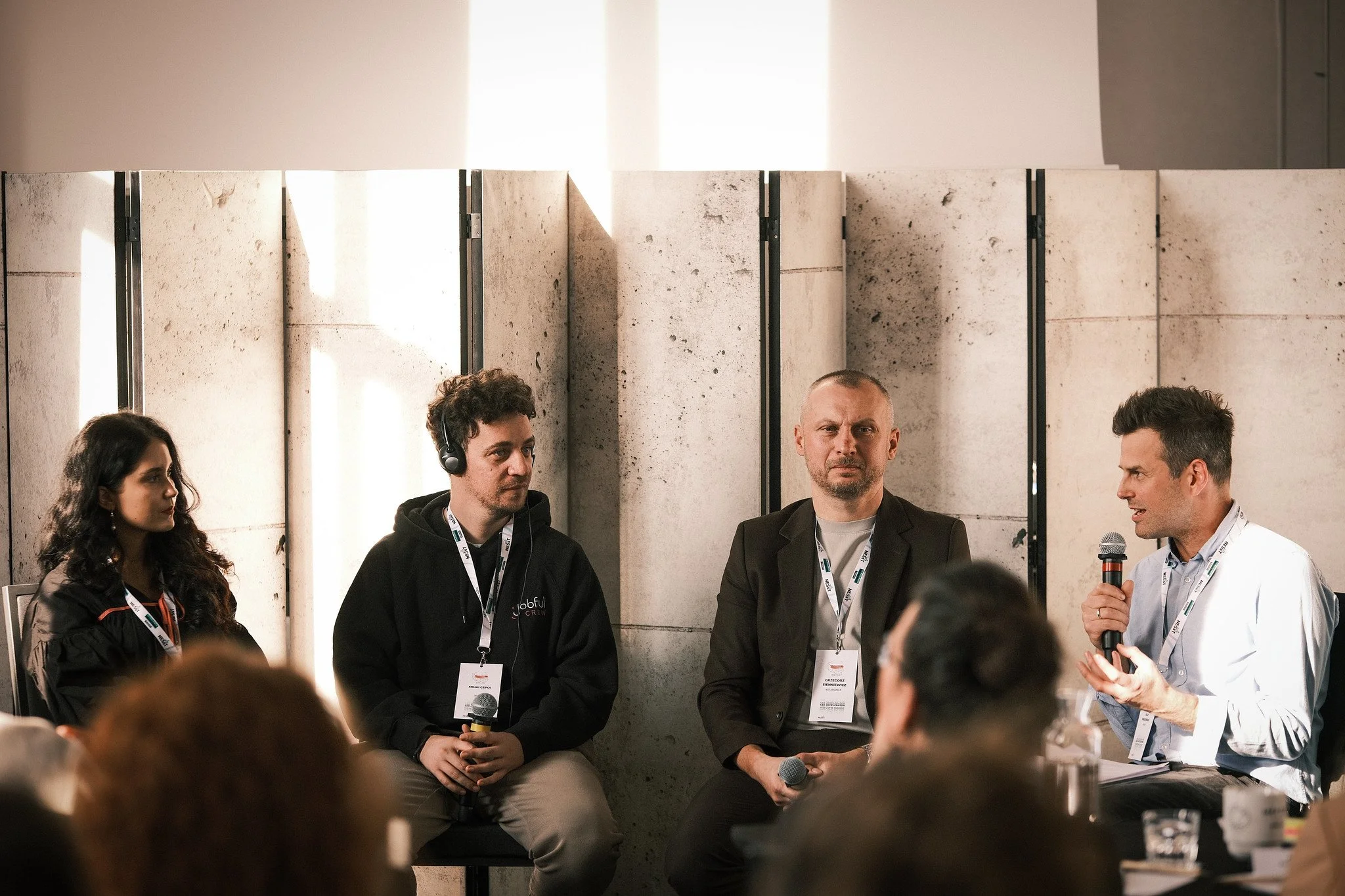
Mihai (second from left) talks on an Diversity, Equity and Inclusion (DEI) panel alongside representatives from CoopTech Hub and 4Starlings held at the NESsT portfolio gathering in Warsaw, Poland in October 2025
Interviewer: Mihai, what matters most to you when it comes to impact and giving something back to the community? What is the most important thing for you in this regard?
Mihai: Nothing is more motivating for our team than receiving a message from a person with a disability, a refugee, a migrant, or someone from another vulnerable background, who tells us: you made a difference for me. Someone who says they were looking for a job, for an opportunity they couldn’t find before—and that we helped make that happen. That person goes back into the world and multiplies that impact, creating positive change for others in turn. It’s about passing forward the idea that helping others brings something meaningful back, one way or another.
That’s when we know that the mission and vision we started with are not just words—but something we are truly delivering on.
You can learn more about NESsT’s work in Romania and apply to be part of our portfolio below