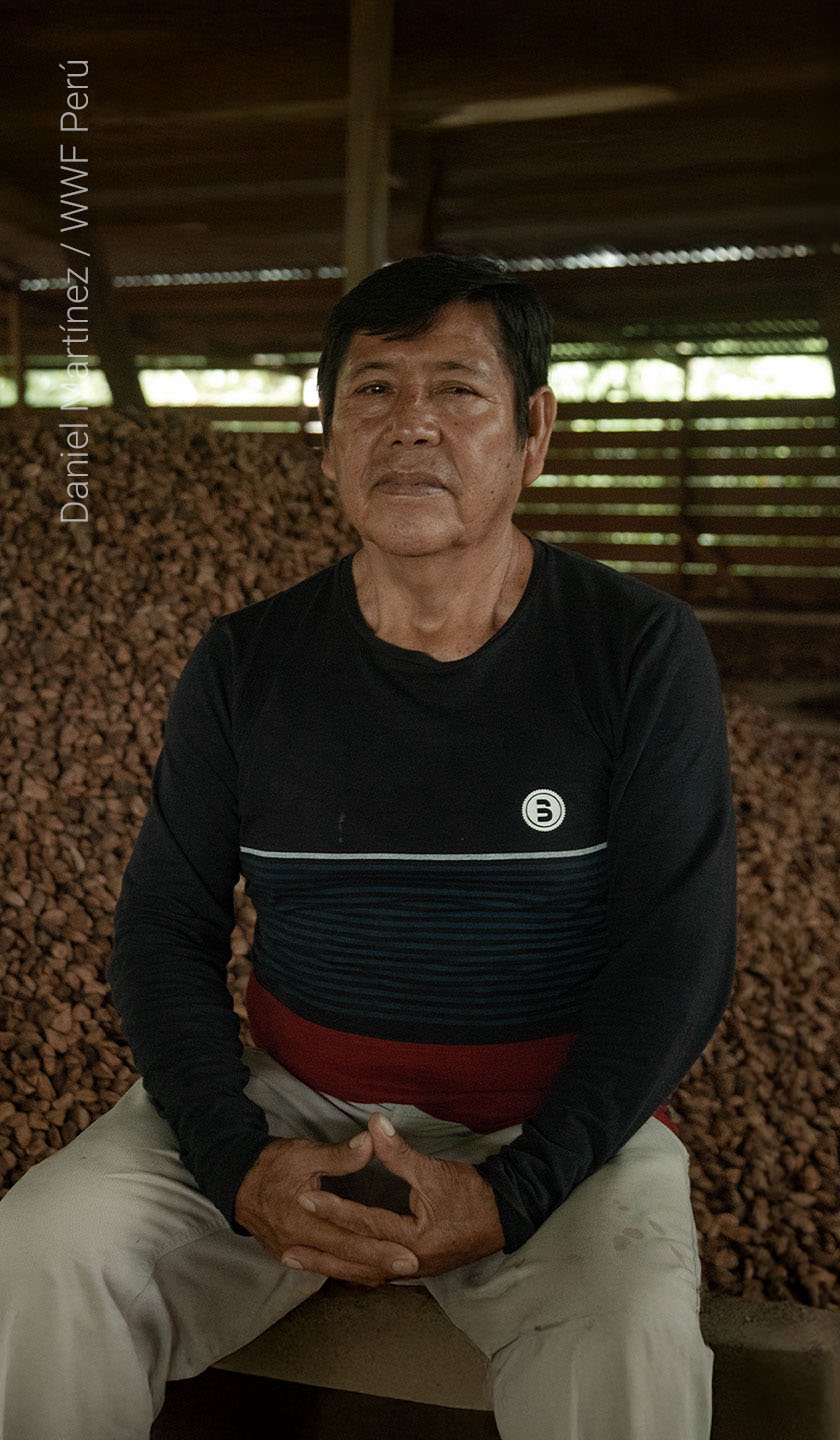
Martín Huaypuna
Founder of AFIMAD, Peru
From Fear to a Collective Dream
The day he almost lost his son, Martín understood he could no longer risk his life simply to put food on the table. He and his boy had been stranded in the mountains for days, harvesting Brazil nuts. Heavy floods had swollen the river and submerged the forest, making it impossible to leave. As food ran out, Martín’s 12-year-old son had to descend to the ravine every morning, hoping to catch a fish for breakfast. Life had become unsustainable.
When hunger became unbearable, Martín made a desperate decision: he told his son to take the canoe and go, while he stayed behind to guard the collected nuts. “There is nothing to eat here. Go, you go,” he insisted. The plan nearly turned tragic. The boy lost his balance and fell into the powerful current. “When I saw my little son in the middle of the river, kicking like an insect, like a butterfly…” Martín remembers. “The only thing I could shout was: ‘Swim, swim, swim!’” Miraculously, the boy grasped the leaves of a cane on the riverbank, injuring his hands but surviving long enough to be rescued and taken to Puerto Maldonado.
That terrifying moment forced Martín to rethink his life entirely. Alone in the mountains afterwards, he asked himself how to escape such dangerous conditions. From that question emerged an idea that would reshape the future of many families: the creation of an Indigenous multi-communal enterprise.
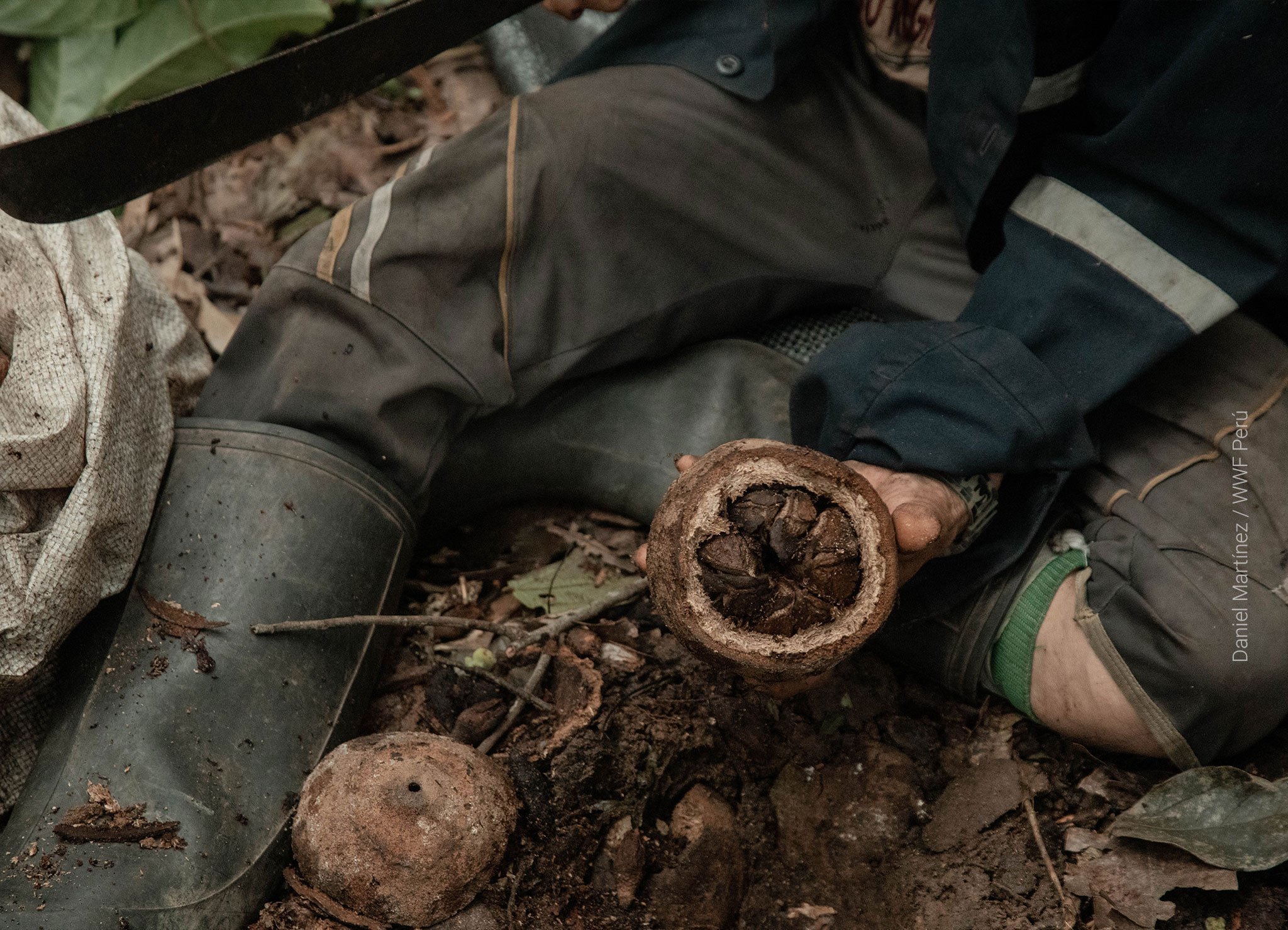
When Martín returned to his community, he brought a concrete proposal. Historically, Brazil nut harvesters like him depended on middlemen who set the prices, controlled the profits, and often pushed families into the forest during dangerous times. Martín suggested changing the model: stop selling raw nuts, peel them within the community, and negotiate better prices. But achieving this required collective strength, so he helped form the first Indigenous Brazil Nut Committee in Madre de Dios. “We no longer sold to the merchant like before. We peeled the nuts in the community and sold them peeled—and at a better price.”
The agreement between several communities led to the creation of AFIMAD—the Madre de Dios Indigenous Forestry Association—in 2008. At first, the organization focused exclusively on Brazil nut harvesting. Extraction became more orderly, prices improved, and communities gradually achieved formalization, land titles, and organic and Fair Trade certifications. AFIMAD began collecting and marketing production under far better terms. By 2020, they achieved their first export: “We made our first export with six containers—more than 100 tons,” Martín says with pride.
Along the way, they realized that depending on a single seasonal harvest was risky. Martín and his partners searched for new opportunities and saw potential in huicungo, the fruit of an undervalued palm. With support from allies like NESsT, they opened a new production line. Here, women became the central protagonists. AFIMAD created six community committees of huicungueras. “Women are the ones who extract huicungo in each community… The income belongs to them.” These women manage the money and decide how to invest it.
The impact was immediate: better nutrition for children, the ability to pay for school supplies, and a sense of stability in the communities. They were no longer dependent on a single annual harvest but on two sustainable activities that “do not harm the environment” and “contribute to forest conservation.”
Today, AFIMAD brings together “a little more than 300” families. With consistent funding and ongoing training, the organization has built a strong culture of innovation. Their vision extends well beyond Brazil nuts and huicungo. AFIMAD has introduced cocoa to some communities and built a Brazil nut processing plant, producing value-added products like snacks, oil, and flour. Their next ambition: Brazil nut noodles.
The sacrifice behind this progress has been immense. For years, members worked without pay. Now, they see a dramatic contrast: “Communities were very different before… houses have improved. Family income has improved. They can buy things; they can educate their children. Before AFIMAD, communities had too precarious an economy—not even enough to eat.”
What began with the fear of losing a child in a flooded river has become a stable horizon for future generations: more income, more education, more options—and all of it achieved without harming the forest.